Top brands trust DIP Insights to drive growth

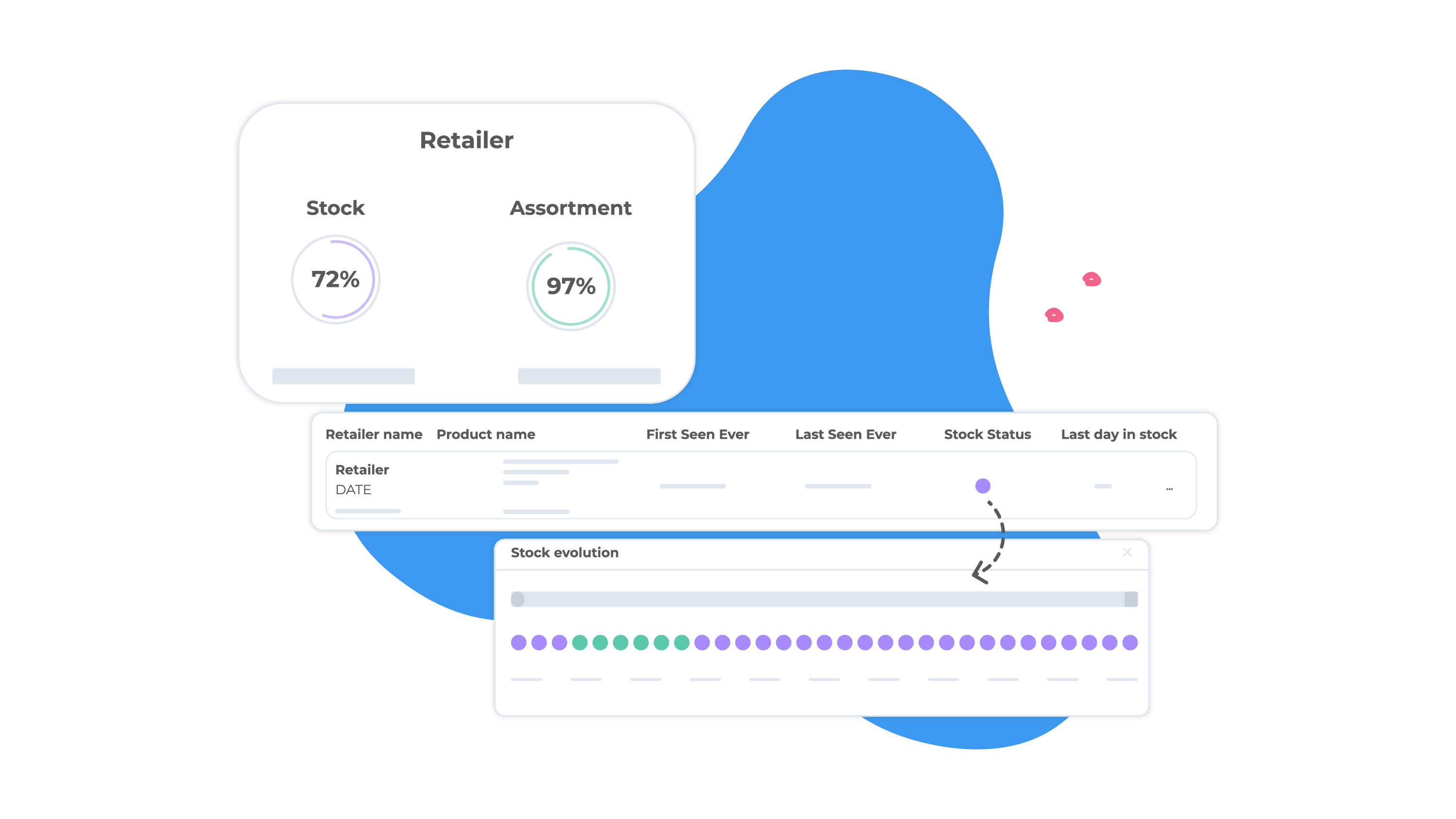
Availability control

Anticipate stockouts and improve your sales. Monitor your own and competitors' inventory. Detect product shortages to optimize your assortment.

a computer screen shows a graph showing the price of each solution

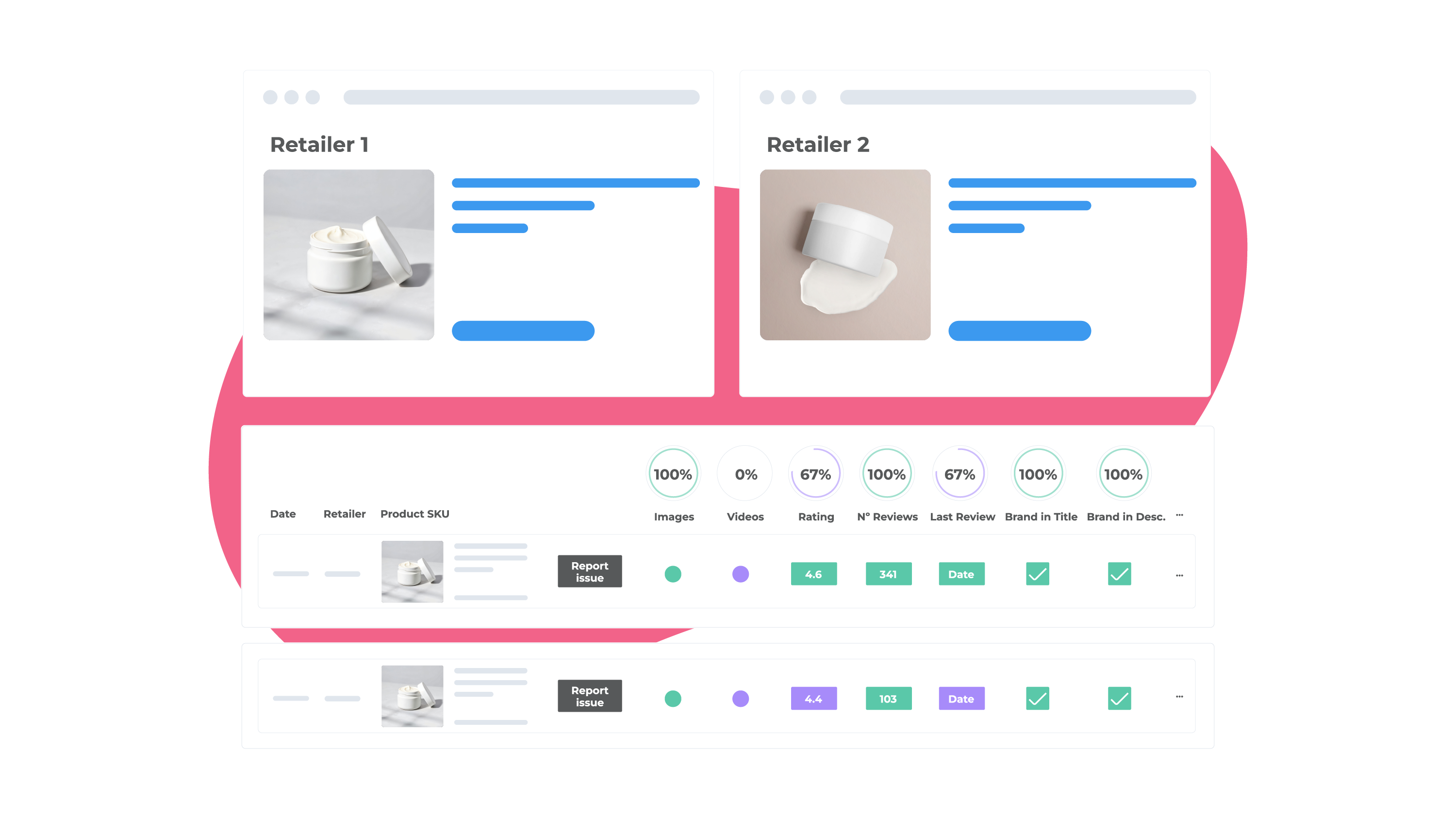
Stock tracking

Monitor the availability of your products across different channels, as well as your competitors' products, to gain a competitive advantage by adjusting your monitoring frequency to suit your needs.

a screenshot of a website showing two different retailers

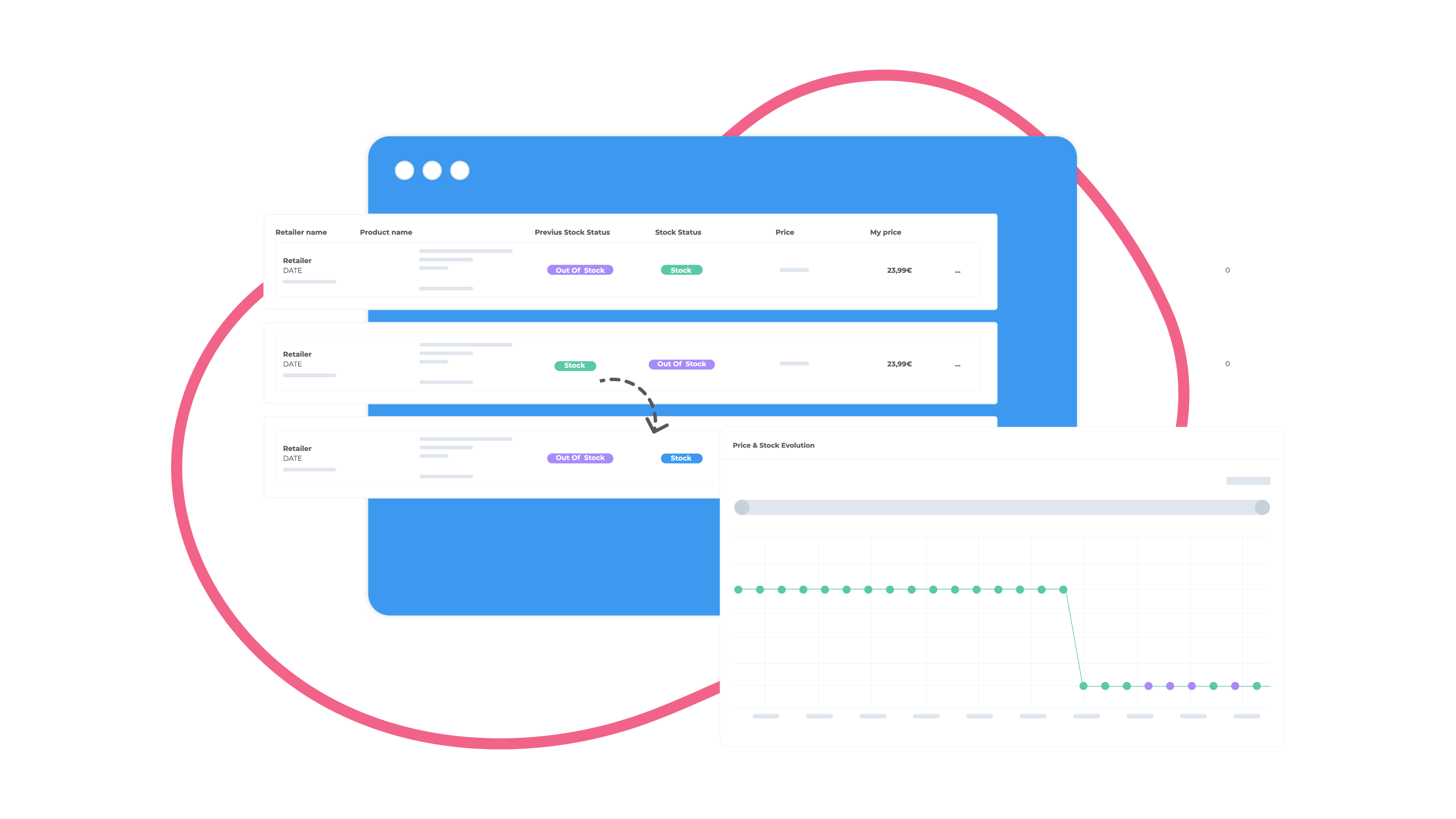
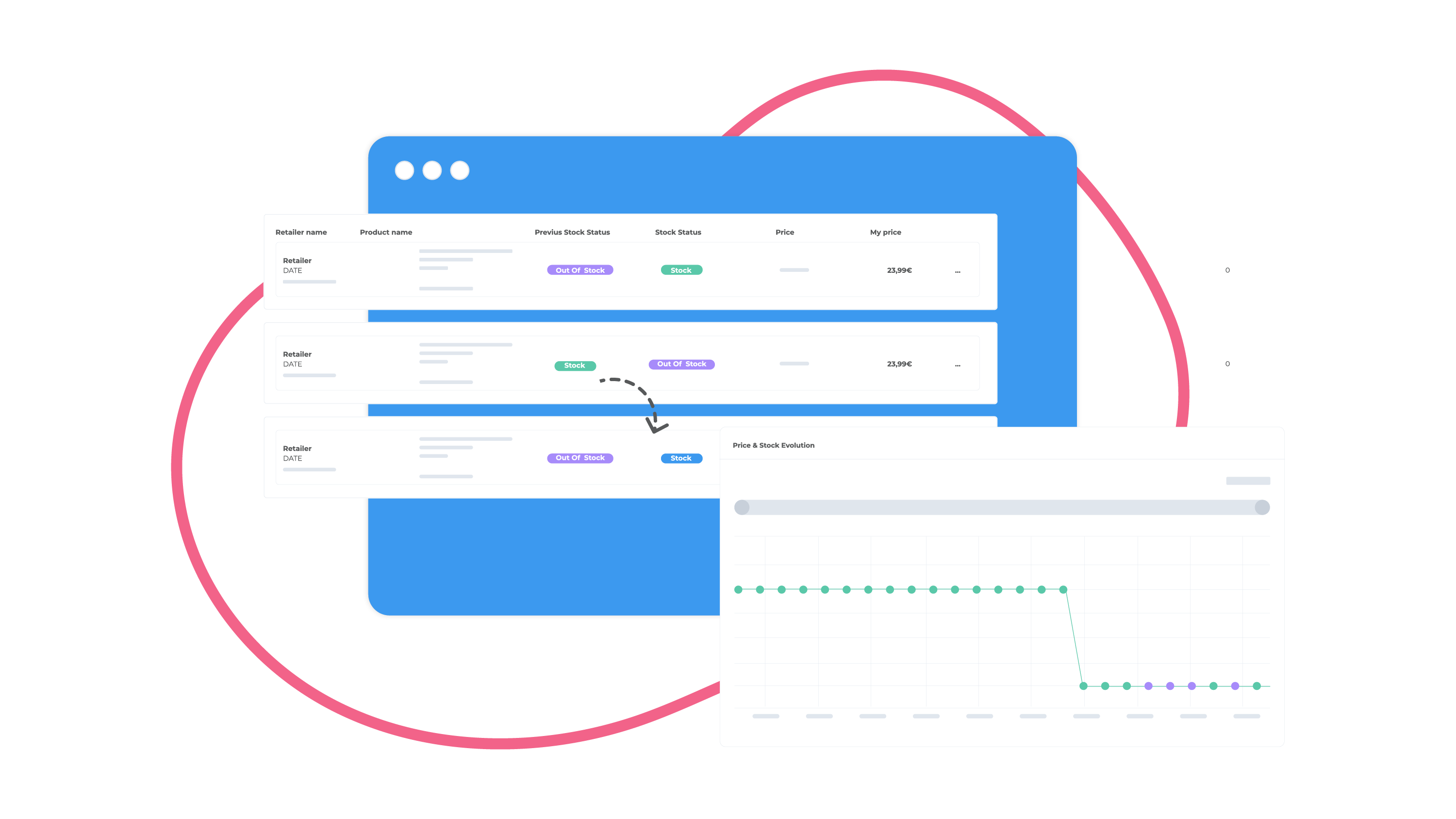
Smart alerts and notifications

Set up alerts and generate automatic reports that keep you informed of any changes.

a computer screen shows a graph showing the price of each solution

Anticipation of stockouts

Optimize assortment planning across different sales channels to prevent stockouts and ensure supply continuity.

Act with the confidence of having real data at your fingertips

None

A team by your side

Technology, data, and people fully committed to your success. More than just a tool.

None

Reliable data

We extract directly from the retailer’s front end—we see what your customer sees.

None

Scalable

Millions of daily extractions across more than 30 countries.

None

Easy to use

Data in context, empowering you to make strategic decisions.

Ecommerce

Monitor prices, stock, and content across all your sales channels. Spot inconsistencies, boost margins, and make decisions backed by real data.

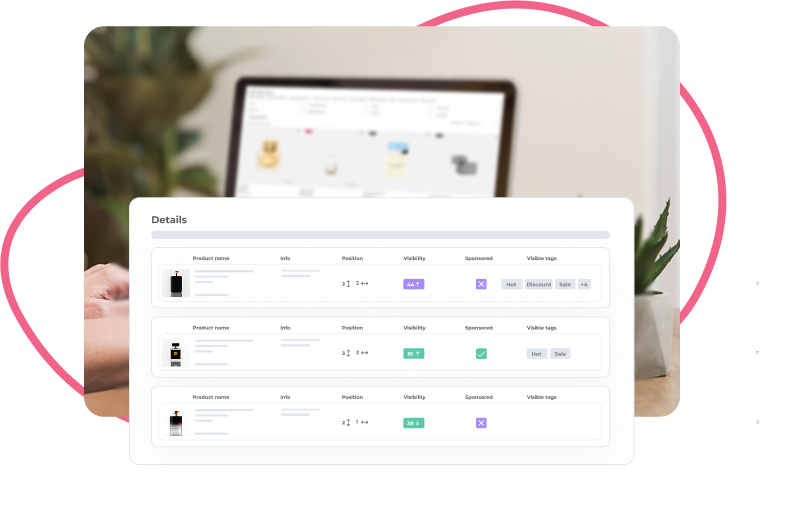
LEARN MORE ABOUT ECOMMERCE a person is looking at a computer screen that says details

Marketplaces

Keep tabs on every seller on your platform. Verify prices, detect unauthorized products, and ensure a consistent shopping experience.

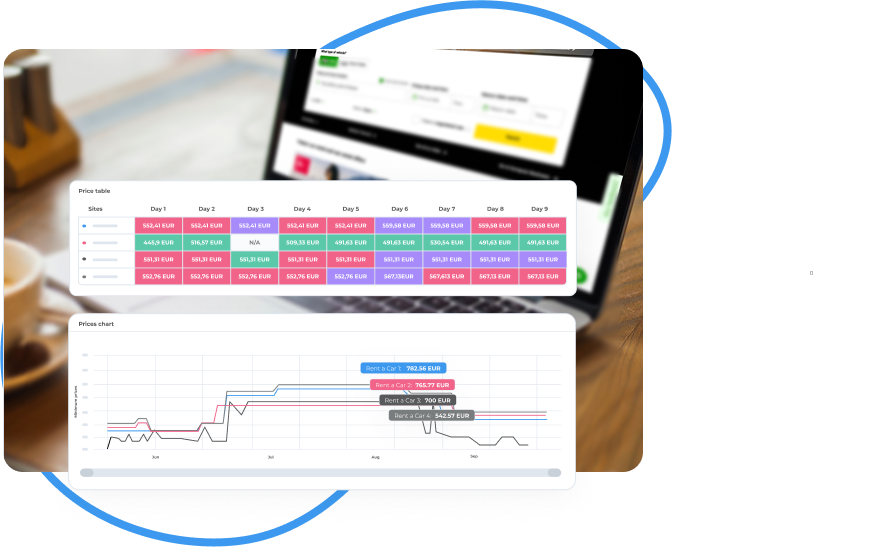
LEARN MORE ABOUT MARKETPLACES a laptop with a price table on the screen

Retailers

Manage your digital catalog with accuracy. Track availability and pricing to optimize profitability and boost your positioning.

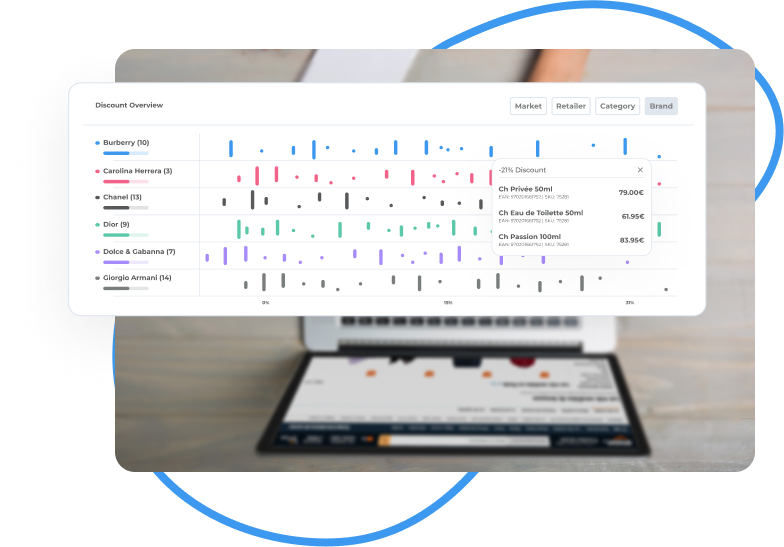
LEARN MORE ABOUT RETAILERS a laptop is open to a page that says discount overview

Brands

Protect your brand’s value in the digital space. Identify unauthorized sellers, monitor price compliance, and strengthen your commercial strategy.

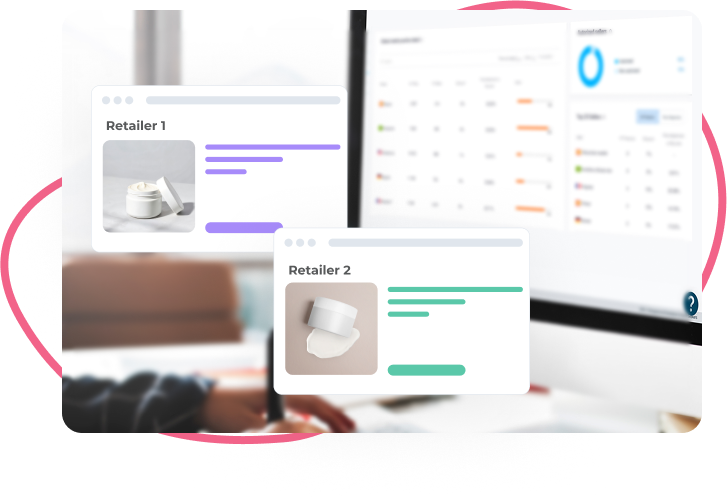
LEARN MORE ABOUT BRANDS a computer screen displays a list of retailers

Rent a Car

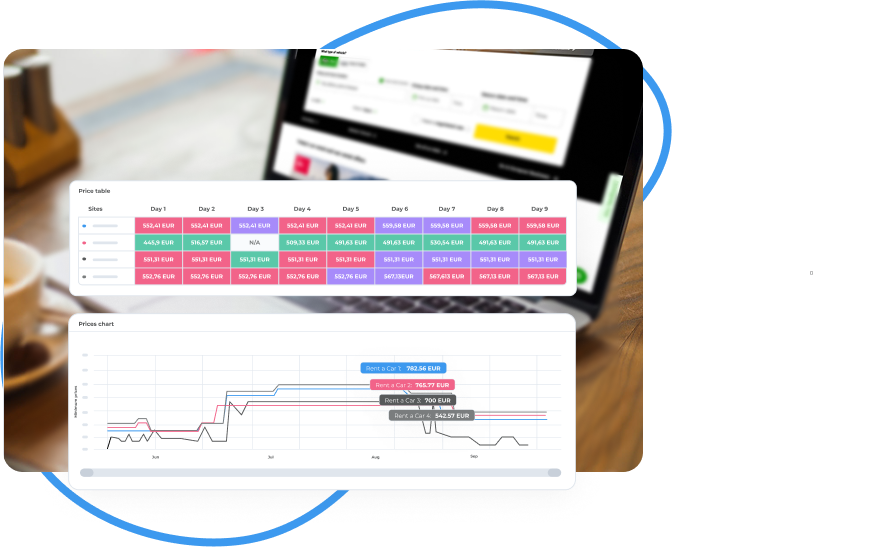
Track real-time pricing on OTAs, brokers, and direct competitors. Detect discrepancies, improve positioning, and maximize revenue with accurate data.

LEARN MORE ABOUT RENT A CAR a person is using a laptop with a screen that says ' preview stock status ' on it

Find out how we can help you with real data

Insights Hub Data that reveals, strategies that work

05/12/2025 · Ana Lara
Pricing strategy for companies: from diagnosis to impact with real data
Designing a solid pricing strategy is no longer optional: it's a direct driver of margins, competitiveness, and market share. In a context where online retailers update their prices several times a day and where new brands are rapidly entering every category, having a professional pricing system becomes a key factor for scaling.

Next, we analyze how to evolve from an initial diagnosis to an operational pricing scheme that generates real impact, supported by reliable and up-to-date data, and where platforms like DIP Insights allow you to monitor the market in real time.

What is an effective pricing strategy in competitive environments?


An effective pricing strategy is one that balances margin, demand, and competitive positioning within the market context. It requires a deep understanding of:
  • The level of competition in each category
  • Consumer sensitivity to price changes
  • Direct and indirect costs that affect profitability
  • The position the brand wants to occupy in relation to other alternatives
Without a system to capture and organize this information, companies are exposed to price wars, often giving up margin without real need.

Furthermore, a robust strategy avoids reactive decisions and allows planning based on predictive models, advanced pricing methods, and a catalog well segmented by channel.

Variables that affect margin: elasticity, mix, promotions, channels


To set prices accurately, it is essential to understand which variables actually affect the margin:
  1. Elasticity of demand
    It allows you to anticipate how customers will react to price changes. Without this information, it's impossible to set competitive prices without sacrificing profitability.

  2. Product mix and catalog depth
    Pricing types should be adapted to the strategic function of each SKU: crawler, premium, long tail, bundles or turnover products.
  3. Promotions and seasonality
    Excessive discounting without elasticity control accelerates margin erosion. A data-driven promotional strategy makes all the difference.
  4. Channels and geography
    Pricing is not uniform. It varies by country, marketplace, physical retail, and e-commerce, especially in omnichannel environments.

Enterprise framework for defining prices by category and country


Advanced organizations operate with a structured framework that coordinates teams, data, and decisions. This enables them to execute complex strategies: differential pricing, penetration pricing, skimming pricing, hybrid models, and, increasingly, dynamic pricing.

Governance: roles, data SLAs, compliance


A professional pricing model requires:
  • Clear roles: revenue manager, category manager, data analysts and pricing specialists.
  • Data SLAs: frequency and quality of competitive and inventory information.
  • Compliance: adherence to internal and regulatory policies to avoid risks in sensitive markets.
Without governance, data does not become decisions; it remains in reports.

Integration with BI/ERP and revenue tools


Pricing becomes a transversal lever when it is connected with:
  • ERP and cost systems
  • Revenue management tools
  • BI platforms to monitor KPIs
  • Cataloging and stock systems
Automation allows you to go from weeks to minutes between detecting a competitive move and adjusting prices accordingly.

How to go from insight to pricing rule


The true competitive advantage emerges when companies are able to transform data into action. The process typically follows four steps:
  1. Monitoring: capturing competitor prices, stock, catalog, and promotions.
  2. Diagnosis: Identify repositioning opportunities, demand leakage, or margin erosion.
  3. Modeling: applying pricing and elasticity methods to define reliable rules.
  4. Activation: Automate pricing changes based on predefined triggers: availability, turnover, position on the digital shelf, etc.
A rule can be as simple as maintaining a competitive price against a set of rivals, or as advanced as dynamically adjusting prices according to actual demand.

Use cases with DIP Insights


  1. Real-time monitoring of prices, stock, and promotions. Continuous capture of competitive data across multiple channels and marketplaces to detect movements that impact margin and competitiveness.

  2. Strategic optimization by category, channel, and country. Multi-market comparisons with configurable alerts to define precise local prices, avoiding overpricing or underpricing based on geography and channel.

  3. Repricing automation with configurable alerts. Set up immediate alerts for changes in competitor prices or stock levels and apply automatic price adjustments according to user-defined business rules, such as minimum and maximum limits or update frequency. This allows you to maintain consistency and agility in price management within a defined strategy.

  4. Ensure price consistency across markets and distributors. Detailed monitoring of prices applied by distributors in different markets and channels, with proactive alerts to detect deviations and ensure alignment with the global pricing strategy.

  5. Advanced catalog and digital shelf management: Analysis of presence, positioning, and gaps on digital shelves, with stock alerts to optimize visibility, assortment, and sales in marketplaces.
DIP Insights integrates with ERP and BI platforms to scale pricing and distribution decisions across multiple markets and channels, maximizing margin with reliable, real-time data.
See more
25/11/2025 · Ana Lara x M4E
Why your e-commerce strategy shouldn't end on Black Friday
Black Friday remains the biggest annual event for e-commerce : skyrocketing traffic, peak conversion rates, and pricing strategies pushed to the limit. But once the discount storm subsides, many brands let their guard down at the most crucial moment: the time to analyze, learn, and optimize.

The most common mistake is thinking that digital strategy is only measured on peak demand days. In reality, true online success is built by carefully managing three fundamental pillars of e-commerce throughout the year: inventory, pricing, and digital shelf.

Because just as the Customer Journey doesn't end with the purchase, the e-commerce strategy shouldn't end with Black Friday either.

READ THE FULL ARTICLE AT MARKETING4ECOMMERCE.

See more
15/11/2025 · Alexandra Canu
How to win on Black Friday with data, pricing, and an optimized digital shelf
Black Friday and peak seasons represent one of the biggest opportunities of the year for online brands and retailers. But they are also times of maximum pressure: prices change in a matter of minutes, competition intensifies, and every mistake can directly impact sales.

To successfully navigate this, the key lies in the data. Having accurate and up-to-date information on catalog, stock, prices, and digital presence allows you to anticipate market trends and make smarter decisions.

At DIP Insights, we have prepared a new free white paper with a checklist that will help you assess whether your strategy is ready for peak demand times.

What will you find in this checklist?


The document summarizes the four fundamental pillars for successfully facing e-commerce peak seasons:
  1. Catalog
    Check if your products have the necessary visibility and coverage across all digital channels.
  2. Stock & Assortment
    Evaluate whether you have the optimal assortment to meet demand without compromising profitability.

  3. Digital Shelf
    Analyze the consistency, positioning, and impact of your brand across different marketplaces and online stores.
  4. Price intelligence
    Ensure your pricing strategies are dynamic, competitive, and aligned with market movements.

Prepare for peak sales periods with data and control


Each item on the checklist includes key questions that will help you identify opportunities for improvement and optimize your business strategy before the busiest days of the year arrive.

If you want to maximize your results during Black Friday and the upcoming peak seasons, download the full white paper and review your strategy step by step.

DOWNLOAD THE FREE WHITEPAPER
See more
16/10/2025 · Curro Pavón
Advanced web scraping: How to overcome barriers and extract reliable data in e-commerce
In today's digital environment, data capture and analysis have become the driving force of innovation and competitiveness. For e-commerce, the value of data goes far beyond collecting it: what truly makes the difference is the ability to extract reliable information, transform it into actionable insights, and make strategic decisions in real time.

What is web scraping and why is it key in e-commerce?


Web scraping is a technique that allows you to automatically extract information from websites, transforming large volumes of data into structured and useful knowledge. In e-commerce, this practice is essential for:
  • Monitor competitor prices in real time.
  • Analyze product assortments and availability at different retailers.
  • Detect market trends before other players.
  • Optimize pricing and catalog strategies based on reliable data.

In an industry where every second counts, data quality is critical. Incomplete, outdated, or unreliable data can lead to poor decisions, impact margins, and compromise the customer experience. Therefore, ensuring accurate, validated, and scalable data is the true competitive advantage.

From extraction to action


The process of converting data into strategic value goes through three critical phases:
  1. Extraction : Overcoming technical barriers to obtaining accurate information from websites with complex architectures.
  2. Debugging : After scraping, you need to transform the raw data into useful, structured information that meets specific needs.
  3. Action : Turn insights into strategic, real-time business decisions.

Barriers that hinder access to data


The most technologically mature websites are typically not designed for open, automated data access. The main obstacles include:
  • Advanced Captchas, which block automated access and require adaptive solutions.
  • Dynamic and complex architectures, which make systematic data collection difficult.
  • IP or geolocation blocks, which restrict the availability of information.

Our differential approach


Faced with these barriers, traditional scraping is insufficient. At DIP Insights, we go further, adapting advanced web scraping technologies and strategies to each client's needs to access hard-to-find information and transform it into strategic knowledge:
  • We identify the technical obstacles.
  • We develop customized solutions.
  • We clean and refine the data.
  • We analyze information to generate strategic insights.

The technology that makes it possible


At Data Seekers, the technology that powers DIP Insights has been designed with a clear objective: to ensure that the foundation of any monitoring and digital shelf analysis is reliable, robust, and scalable. This means that every client can trust that, behind any visualization, alert, or report, the data is:
  • Complete, because we overcome the most complex barriers and access information that others cannot.
  • Reliable and high-quality, thanks to continuous scraping, debugging, and validation processes. Having quality data, updated daily and without interruption, is the differentiating factor that sets us apart and brings real value to our clients.
  • Scalable, capable of growing at the pace of each market and category. While extracting data from a single product in a marketplace can be relatively trivial, today the real challenge is doing so for millions of products every day, ensuring data reliability and availability so that strategic decisions can be made in a timely manner and without compromising their value.
Thanks to this approach, brands and retailers not only gather information, but also access a solid, strategic asset that drives faster and more effective business decisions. The result:
  • Early detection of competitor movements.
  • Dynamic price adjustment.
  • Optimization of catalogs and assortments.
  • Greater strategic agility in a hypercompetitive environment.
In e-commerce, the power isn't simply in having data, but in having it earlier, better, and more reliably than anyone else. The combination of daily data quality and high-volume scalability is what makes DIP Insights a real competitive advantage for any brand or retailer.
See more
06/10/2025 · Ana Lara x EcommerceNews
Digital shelf: the decisive showcase for online sales
In today's e-commerce, the point of sale is no longer limited to a physical store or a corporate website. The true showcase where brands stake their visibility and sales is the digital shelf, the space where products compete for prominence in marketplaces, search engines, and online stores.

The way a product appears, is found, and is perceived in this environment largely determines whether it converts into a sale or is lost among hundreds of options.

READ THE FULL ARTICLE IN ECOMMERCE NEWS .

Download full report
See more