Insights Hub Data that reveals, strategies that work

05/12/2025 · Ana Lara
Pricing strategy for companies: from diagnosis to impact with real data
Designing a solid pricing strategy is no longer optional: it's a direct driver of margins, competitiveness, and market share. In a context where online retailers update their prices several times a day and where new brands are rapidly entering every category, having a professional pricing system becomes a key factor for scaling.

Next, we analyze how to evolve from an initial diagnosis to an operational pricing scheme that generates real impact, supported by reliable and up-to-date data, and where platforms like DIP Insights allow you to monitor the market in real time.

What is an effective pricing strategy in competitive environments?


An effective pricing strategy is one that balances margin, demand, and competitive positioning within the market context. It requires a deep understanding of:
  • The level of competition in each category
  • Consumer sensitivity to price changes
  • Direct and indirect costs that affect profitability
  • The position the brand wants to occupy in relation to other alternatives
Without a system to capture and organize this information, companies are exposed to price wars, often giving up margin without real need.

Furthermore, a robust strategy avoids reactive decisions and allows planning based on predictive models, advanced pricing methods, and a catalog well segmented by channel.

Variables that affect margin: elasticity, mix, promotions, channels


To set prices accurately, it is essential to understand which variables actually affect the margin:
  1. Elasticity of demand
    It allows you to anticipate how customers will react to price changes. Without this information, it's impossible to set competitive prices without sacrificing profitability.
  2. Product mix and catalog depth
    Pricing types should be adapted to the strategic function of each SKU: crawler, premium, long tail, bundles or turnover products.
  3. Promotions and seasonality
    Excessive discounting without elasticity control accelerates margin erosion. A data-driven promotional strategy makes all the difference.
  4. Channels and geography
    Pricing is not uniform. It varies by country, marketplace, physical retail, and e-commerce, especially in omnichannel environments.

Enterprise framework for defining prices by category and country


Advanced organizations operate with a structured framework that coordinates teams, data, and decisions. This enables them to execute complex strategies: differential pricing, penetration pricing, skimming pricing, hybrid models, and, increasingly, dynamic pricing.

Governance: roles, data SLAs, compliance


A professional pricing model requires:
  • Clear roles: revenue manager, category manager, data analysts and pricing specialists.
  • Data SLAs: frequency and quality of competitive and inventory information.
  • Compliance: adherence to internal and regulatory policies to avoid risks in sensitive markets.
Without governance, data does not become decisions; it remains in reports.

Integration with BI/ERP and revenue tools


Pricing becomes a transversal lever when it is connected with:
  • ERP and cost systems
  • Revenue management tools
  • BI platforms to monitor KPIs
  • Cataloging and stock systems
Automation allows you to go from weeks to minutes between detecting a competitive move and adjusting prices accordingly.

How to go from insight to pricing rule


The true competitive advantage emerges when companies are able to transform data into action. The process typically follows four steps:
  1. Monitoring: capturing competitor prices, stock, catalog, and promotions.
  2. Diagnosis: Identify repositioning opportunities, demand leakage, or margin erosion.
  3. Modeling: applying pricing and elasticity methods to define reliable rules.
  4. Activation: Automate pricing changes based on predefined triggers: availability, turnover, position on the digital shelf, etc.
A rule can be as simple as maintaining a competitive price against a set of rivals, or as advanced as dynamically adjusting prices according to actual demand.

Use cases with DIP Insights


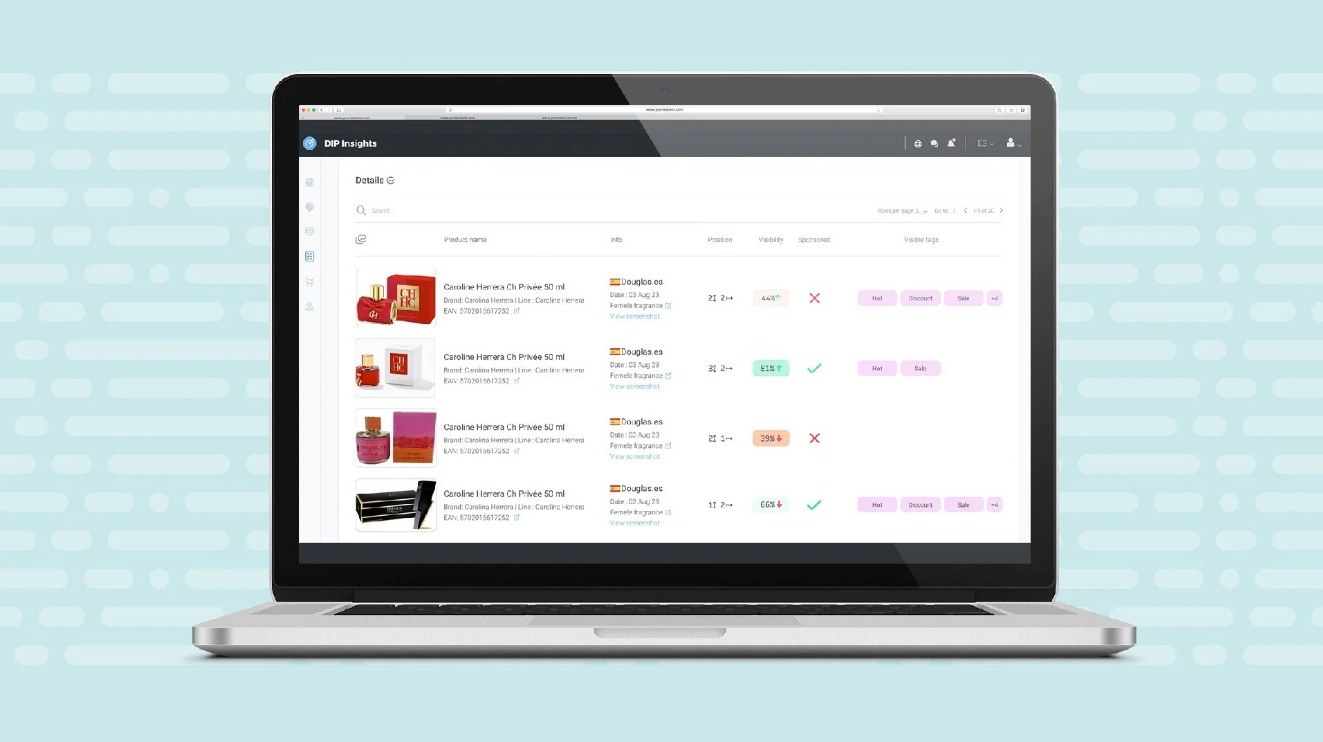
  1. Real-time monitoring of prices, stock, and promotions. Continuous capture of competitive data across multiple channels and marketplaces to detect movements that impact margin and competitiveness.

  2. Strategic optimization by category, channel, and country. Multi-market comparisons with configurable alerts to define precise local prices, avoiding overpricing or underpricing based on geography and channel.

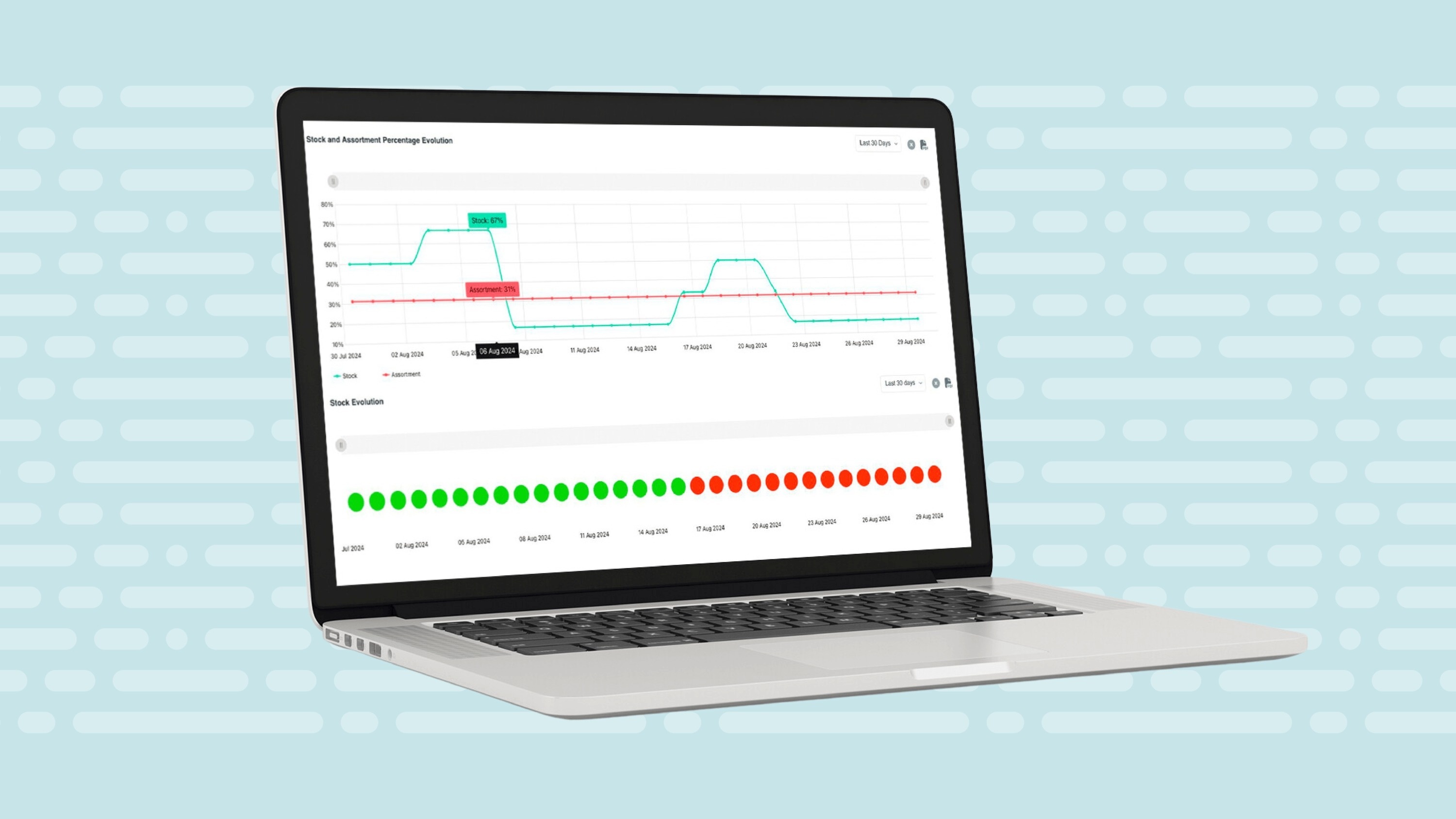
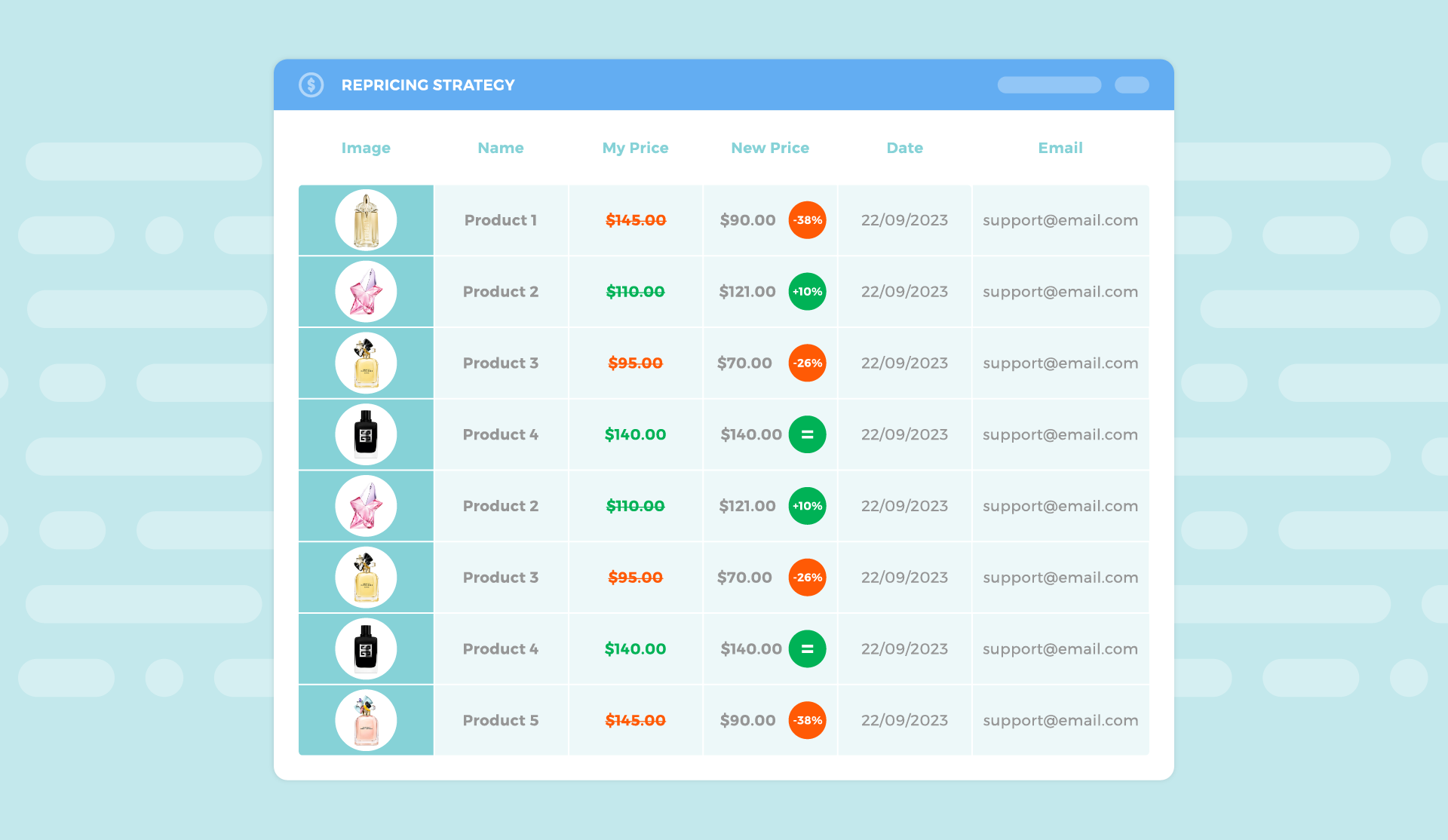
  3. Repricing automation with configurable alerts. Set up immediate alerts for changes in competitor prices or stock levels and apply automatic price adjustments according to user-defined business rules, such as minimum and maximum limits or update frequency. This allows you to maintain consistency and agility in price management within a defined strategy.

  4. Ensure price consistency across markets and distributors. Detailed monitoring of prices applied by distributors in different markets and channels, with proactive alerts to detect deviations and ensure alignment with the global pricing strategy.

  5. Advanced catalog and digital shelf management: Analysis of presence, positioning, and gaps on digital shelves, with stock alerts to optimize visibility, assortment, and sales in marketplaces.
DIP Insights integrates with ERP and BI platforms to scale pricing and distribution decisions across multiple markets and channels, maximizing margin with reliable, real-time data.
See more
25/11/2025 · Ana Lara x M4E
Why your e-commerce strategy shouldn't end on Black Friday
Black Friday remains the biggest annual event for e-commerce : skyrocketing traffic, peak conversion rates, and pricing strategies pushed to the limit. But once the discount storm subsides, many brands let their guard down at the most crucial moment: the time to analyze, learn, and optimize.

The most common mistake is thinking that digital strategy is only measured on peak demand days. In reality, true online success is built by carefully managing three fundamental pillars of e-commerce throughout the year: inventory, pricing, and digital shelf.

Because just as the Customer Journey doesn't end with the purchase, the e-commerce strategy shouldn't end with Black Friday either.

READ THE FULL ARTICLE AT MARKETING4ECOMMERCE.

See more
15/11/2025 · Alexandra Canu
How to win on Black Friday with data, pricing, and an optimized digital shelf
Black Friday and peak seasons represent one of the biggest opportunities of the year for online brands and retailers. But they are also times of maximum pressure: prices change in a matter of minutes, competition intensifies, and every mistake can directly impact sales.

To successfully navigate this, the key lies in the data. Having accurate and up-to-date information on catalog, stock, prices, and digital presence allows you to anticipate market trends and make smarter decisions.

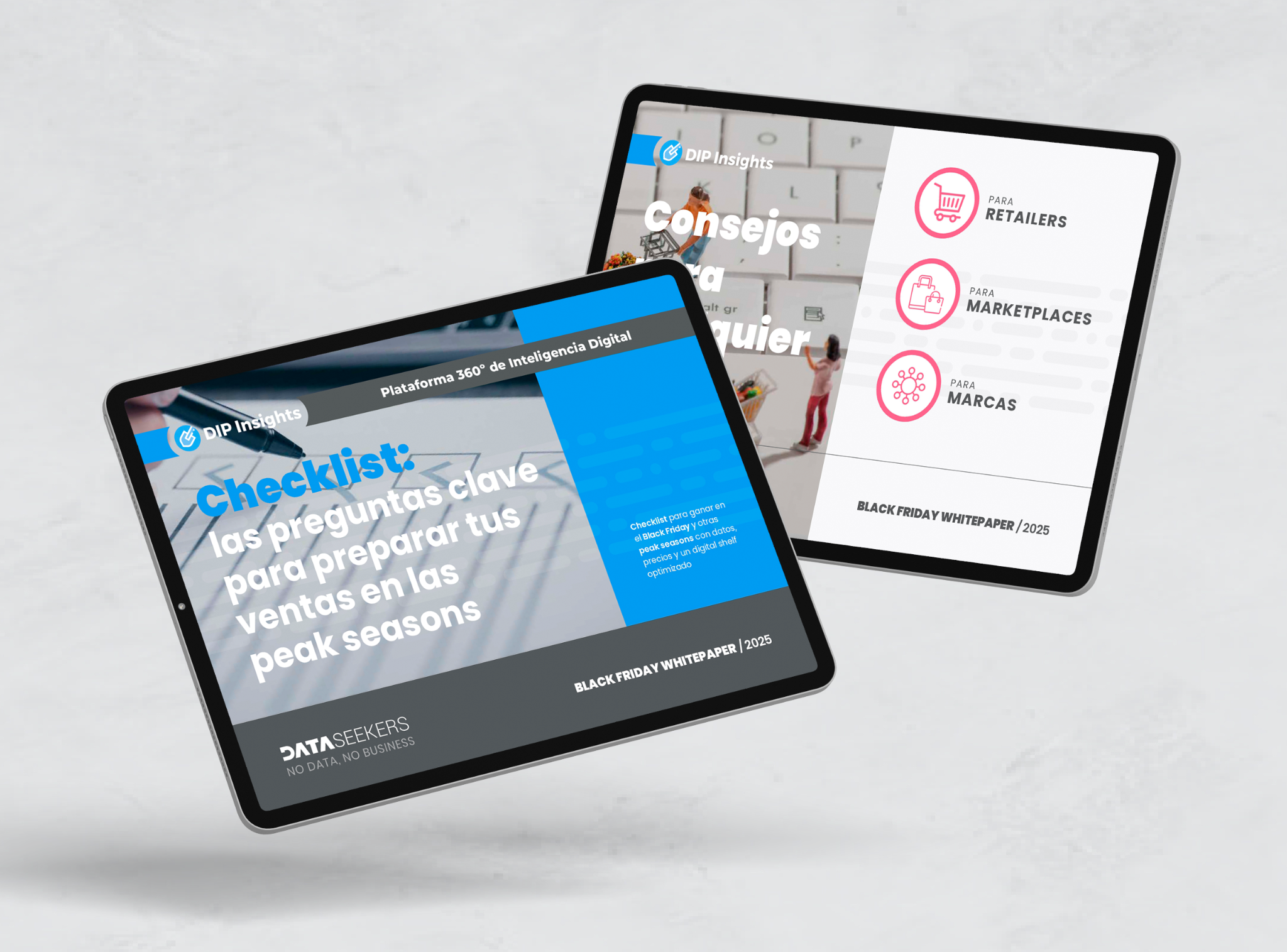
At DIP Insights, we have prepared a new free white paper with a checklist that will help you assess whether your strategy is ready for peak demand times.

What will you find in this checklist?


The document summarizes the four fundamental pillars for successfully facing e-commerce peak seasons:
  1. Catalog
    Check if your products have the necessary visibility and coverage across all digital channels.
  2. Stock & Assortment
    Evaluate whether you have the optimal assortment to meet demand without compromising profitability.
  3. Digital Shelf
    Analyze the consistency, positioning, and impact of your brand across different marketplaces and online stores.
  4. Price intelligence
    Ensure your pricing strategies are dynamic, competitive, and aligned with market movements.

Prepare for peak sales periods with data and control


Each item on the checklist includes key questions that will help you identify opportunities for improvement and optimize your business strategy before the busiest days of the year arrive.

If you want to maximize your results during Black Friday and the upcoming peak seasons, download the full white paper and review your strategy step by step.

DOWNLOAD THE FREE WHITEPAPER
See more
16/10/2025 · Curro Pavón
Advanced web scraping: How to overcome barriers and extract reliable data in e-commerce
In today's digital environment, data capture and analysis have become the driving force of innovation and competitiveness. For e-commerce, the value of data goes far beyond collecting it: what truly makes the difference is the ability to extract reliable information, transform it into actionable insights, and make strategic decisions in real time.

What is web scraping and why is it key in e-commerce?


Web scraping is a technique that allows you to automatically extract information from websites, transforming large volumes of data into structured and useful knowledge. In e-commerce, this practice is essential for:
  • Monitor competitor prices in real time.
  • Analyze product assortments and availability at different retailers.
  • Detect market trends before other players.
  • Optimize pricing and catalog strategies based on reliable data.

In an industry where every second counts, data quality is critical. Incomplete, outdated, or unreliable data can lead to poor decisions, impact margins, and compromise the customer experience. Therefore, ensuring accurate, validated, and scalable data is the true competitive advantage.

From extraction to action


The process of converting data into strategic value goes through three critical phases:
  1. Extraction : Overcoming technical barriers to obtaining accurate information from websites with complex architectures.
  2. Debugging : After scraping, you need to transform the raw data into useful, structured information that meets specific needs.
  3. Action : Turn insights into strategic, real-time business decisions.

Barriers that hinder access to data


The most technologically mature websites are typically not designed for open, automated data access. The main obstacles include:
  • Advanced Captchas, which block automated access and require adaptive solutions.
  • Dynamic and complex architectures, which make systematic data collection difficult.
  • IP or geolocation blocks, which restrict the availability of information.

Our differential approach


Faced with these barriers, traditional scraping is insufficient. At DIP Insights, we go further, adapting advanced web scraping technologies and strategies to each client's needs to access hard-to-find information and transform it into strategic knowledge:
  • We identify the technical obstacles.
  • We develop customized solutions.
  • We clean and refine the data.
  • We analyze information to generate strategic insights.

The technology that makes it possible


At Data Seekers, the technology that powers DIP Insights has been designed with a clear objective: to ensure that the foundation of any monitoring and digital shelf analysis is reliable, robust, and scalable. This means that every client can trust that, behind any visualization, alert, or report, the data is:
  • Complete, because we overcome the most complex barriers and access information that others cannot.
  • Reliable and high-quality, thanks to continuous scraping, debugging, and validation processes. Having quality data, updated daily and without interruption, is the differentiating factor that sets us apart and brings real value to our clients.
  • Scalable, capable of growing at the pace of each market and category. While extracting data from a single product in a marketplace can be relatively trivial, today the real challenge is doing so for millions of products every day, ensuring data reliability and availability so that strategic decisions can be made in a timely manner and without compromising their value.
Thanks to this approach, brands and retailers not only gather information, but also access a solid, strategic asset that drives faster and more effective business decisions. The result:
  • Early detection of competitor movements.
  • Dynamic price adjustment.
  • Optimization of catalogs and assortments.
  • Greater strategic agility in a hypercompetitive environment.
In e-commerce, the power isn't simply in having data, but in having it earlier, better, and more reliably than anyone else. The combination of daily data quality and high-volume scalability is what makes DIP Insights a real competitive advantage for any brand or retailer.
See more
06/10/2025 · Ana Lara x EcommerceNews
Digital shelf: the decisive showcase for online sales
In today's e-commerce, the point of sale is no longer limited to a physical store or a corporate website. The true showcase where brands stake their visibility and sales is the digital shelf, the space where products compete for prominence in marketplaces, search engines, and online stores.

The way a product appears, is found, and is perceived in this environment largely determines whether it converts into a sale or is lost among hundreds of options.

READ THE FULL ARTICLE IN ECOMMERCE NEWS .

Download full report
See more
17/09/2025 · Daniel Romero
How DIP Insights Self-Service Free Trial Works
Now you can experience the full potential of DIP Insights for yourself, hassle-free and with real data from your own products.
Our new Self-Service Free Trial is the easiest way to discover what Data Seekers’ 360º digital intelligence platform can do for your business:
  • Add up to 20 of your products
  • Log in with your personal credentials
  • Monitor your digital market in real time
All of this, try it for free, with no payment details and no sales representatives involved. Request your Self-Service Free Trial.
See more
10/09/2025 · Alexandra Canu
Back to School 2025: Winning Strategies for Brands and Retailers
The 2025 back-to-school campaign is marked by a significant increase in spending and a further consolidation of e-commerce as the preferred purchasing channel for Spanish families. According to Webloyalty's Back to School 2025 report, the average spending on online school purchases stands at €178, 35% more than in 2024. This budget is mainly concentrated on electronics (52%), books (30%), and children's fashion (18%), reflecting the growing digitalization of school consumption.

Beyond the digital environment, the financial burden on families remains considerable. The Cetelem Observatory estimates that the total outlay amounts to €425 per household, including uniforms, school supplies, and other related expenses. The OCU (Spanish Consumer Organization) also warns that the annual cost per child varies between €1,200 in public schools and more than €8,000 in private schools, making September a financial challenge for many households. Faced with this situation, 54% of families say they will maintain their budget compared to the previous year, while 27% will reduce it by borrowing books, reusing materials, or buying secondhand items.
The conclusion is clear: the 2025 back-to-school season is one of the most demanding campaigns in recent years. Consumers are no longer limited to seeking low prices; they demand trust, personalization, speed, and an optimized digital experience. For retailers and brands, September becomes a true test where differentiation depends on the strategy implemented and the intelligent use of technology.

Six key strategies for tackling the return to school season in e-commerce


  1. Detect and react to competition in real time

  2. During these weeks, promotional activity reaches its peak. Monitoring prices, offers, and competitor movements on marketplaces and online stores allows for swift reaction, avoiding margin erosion and positioning the brand where consumers are looking.

  3. Smart pricing strategy and automatic repricing

  4. Defining smart rules to adjust prices based on competitor behavior becomes essential. The ability to anticipate a price drop on a key product can make all the difference, while maintaining consistency and profitability.

  5. Avoid stockouts and optimize your assortment

  6. Shopping cart abandonment due to stock shortages poses a huge risk in seasonal campaigns. Continuous monitoring of your own and competitors inventory helps you anticipate and adjust replenishment or pricing in a timely manner, ensuring you capture demand.

  7. Improve the digital shelf in detail

  8. Consumers increasingly value clarity and transparency: quality images, optimized descriptions, visible reviews, and real availability. Analyzing each product listing and its internal search engine ranking reveals opportunities to improve relevance and conversion.

  9. Global catalog and brand control

  10. Ensuring distribution consistency is key. Identifying unauthorized sellers, detecting new products on the market, or locating gaps in the assortment prevents the loss of control over the brand image. Automated reports help you react quickly.

  11. Add reviews and reputation as part of the strategy

  12. The opinions of other consumers have become established as a decisive purchasing factor. Analyzing ratings and comments allows you to strengthen product listings, improve arguments, and design campaigns based on trust, a crucial element in categories such as electronics and books.

How to prepare for your back-to-school campaign and maximize results with DIP Insights


To successfully tackle the back-to-school campaign, every detail must be taken care of: strategically selecting priority categories, setting clear visibility and margin goals, and continuously monitoring the market and competition.

With DIP Insights, brands and retailers have a comprehensive platform that enables:
  • Set up real-time alerts for prices, inventory, competitor activity, and changes to product listings.
  • Detect gaps in the catalog, such as missing references, incomplete descriptions, or low-quality images, optimizing the shopping experience.
  • Automate price adjustments linked to competitor promotions or out-of-stocks, ensuring competitiveness without compromising profitability.
  • Improve your digital shelf by optimizing titles, bullet points, images, and featured reviews to maximize visibility and conversion.
  • Schedule daily reports, which facilitate intensive and agile management throughout the seasonal campaign.

Anticipate, adapt and compete with advantage


The return to school season in 2025 represents an unprecedented challenge: families are spending more, consumers are more demanding, and the online market is more saturated. In this context, differentiation is no longer just about price, but about the ability to anticipate, adapt, and react quickly.

With DIP Insights, brands and retailers have the intelligence they need to turn September into a growth opportunity: by monitoring in real time, optimizing the digital shelf, controlling the catalog, and transforming reviews into trust.

Ready to pass this campaign with flying colors? Request a free demo of DIP Insights and discover how to approach back-to-school with a competitive advantage.
See more
25/06/2025 · Alexandra Canu
Amazon is betting on premium beauty to bolster its Prime Day 2025
Amazon has launched a strategic offensive ahead of its flagship event, Prime Day 2025, which for the first time will be held over four consecutive days, from July 8 to 11. Far from focusing solely on electronics or technology—historically popular categories—the company is redirecting its efforts toward the premium beauty segment, with brands such as Estée Lauder, Olaplex, and Urban Decay in the promotional spotlight.

This move is no coincidence. The high-end beauty sector has demonstrated solid performance, even in uncertain economic contexts. Between April 2024 and April 2025, sales in this category on Amazon grew by 20%, reaching $15 billion, thanks to a combination of high margins, a growing average ticket price, and leaner logistics than other verticals (source: Reuters).

Why is Amazon now focusing on everyday luxury?


The answer lies in the growing tensions of the macroeconomic and geopolitical context. On the one hand, Amazon is facing new tariff policies that penalize the import of products manufactured in China, especially in low-cost categories. On the other hand, there has been a notable reduction in third-party sellers in its marketplace, a situation that diminishes the variety of offerings in certain price-sensitive verticals.

In this context, premium beauty represents a defensive category: consumers are increasingly seeking products that combine emotional value with functionality, as is the case with high-performance cosmetics, hair care products, or anti-aging serums. Brand loyalty is high, and the perceived value compensates for the premium prices. Furthermore, these types of products tend to have periodic purchasing cycles, which generates repeat customers and fosters customer loyalty and retention.

Prime Day as a showcase for strategic verticals


For Amazon, Prime Day is not only a massive sales event, but also a real-time laboratory for testing product performance, price elasticity, and consumer response. Focusing on categories like premium beauty allows it not only to boost average ticket sales during the event, but also to capture data on purchasing behavior in key segments for future growth.

Logistics also plays in their favor: most products in this category are compact, lightweight, and non-perishable, which facilitates more cost-effective distribution and reduces pressure on logistics centers during peak demand.

What can brands and retailers learn from this strategy?


The Amazon case offers three key lessons for any brand, retailer, or marketplace looking to optimize its value proposition in high-impact campaigns:
  1. Maintaining the category mix : It's not all about volume. In saturated markets, high-margin, high-loyalty categories can make the difference.
  2. Reading the context to refocus efforts : External constraints such as tariffs or third-party withdrawals must be offset by more resilient and profitable verticals.
  3. Transforming events into market intelligence : Every marketing campaign should also be a source of data for learning about preferences, pricing, and positioning.

DIP Insights: How to anticipate e-commerce dynamics with data


In today's dynamic environment, having digital intelligence tools like DIP Insights allows brands and retailers to monitor :
  • The evolution of our own and our competitors' product catalogues.
  • Real-time price fluctuations before, during, and after key campaigns like Prime Day.
  • The emergence of new brands or references in strategic categories.
  • Changes in the availability, popularity, or positioning of your products on marketplaces.

Thanks to DIP Insights' comparative and dynamic vision, it is possible to detect commercial opportunities in advance, respond quickly to market movements and adjust the strategy based on actual consumer behavior.

Amazon is making its move. Brands that want to compete on this new stage need more than just good products: they need data-driven decisions.
See more
16/06/2025 · Ana Lara x M4E
Reduce returns before launch with Digital Shelf analytics
Up to 30% of products sold online are returned, often due to avoidable errors in the product listing. We explain how Digital Shelf analysis allows you to detect errors before launch and optimize digital presentation to minimize returns.

READ THE FULL ARTICLE ON MARKETING4ECOMMERCE .
See more
30/05/2025 · Ana Lara
How to use Data Intelligence to make your brand and products stand out in e-commerce

Why are brands losing visibility (and control) in e-commerce?


Marketplaces and online retailers have changed the game. The growth of these channels has created new opportunities, but also new challenges for brands: they lose visibility , control over how their products are presented , and the ability to react to the competition.
In this environment, it's not enough to be present. You have to make sure you stand out, maintain brand consistency, and compete with data, not intuition .
The big question is clear : how can Data Intelligence help you regain visibility...?

Data Intelligence applied to e-commerce visibility


Data Intelligence enables you to make informed decisions based on up-to-date and accurate data on your brand's presence across different online channels.
Here are some of the key insights you can gain:
    How are my products positioned? → Are they featured on brand pages? Are they featured in banners or in top positions?
    What is the quality of my listing content? → Images, descriptions, reviews… Everything affects conversion.
    Where and how does my brand appear compared to the competition? → Analyze by category, keywords, or product ranking.
Having this visibility allows you to understand what works and what doesn't, identify opportunities for improvement, and detect threats in real time.

Key strategies to improve visibility and control with Data Intelligence


Once you have the right data, the next step is to strategically activate it. Here are some of the most effective strategies:

Integrate advanced analysis tools


Using solutions like Data Seekers' DIP Insights allows you to centralize information and turn it into action. From visibility dashboards to automated alerts about changes to product pages, rankings, or banners.

Define clear and actionable KPIs


Defining the right metrics is essential to properly measure visibility and digital control. It's not just about volume, but also about identifying KPIs that truly inform decision-making: percentage of available stock, product listing score, level of presence in top positions, search share, or performance by market.

Each brand can customize these indicators according to its objectives and priorities, adjusting the weightings it deems most relevant. As the example below shows, these KPIs can be visualized by country or market, facilitating a quick overview of digital performance and allowing for standardized comparisons of results:


Optimize presence in marketplaces


It involves improving content, ensuring availability, optimizing prices, and ensuring the product is properly categorized. The goal: to gain positions and improve the conversion rate.

Monitor the competition and adapt


Observing how other brands gain visibility (with what keywords, banners, or content strategies) allows you to quickly adjust your strategy and not fall behind.

Risks of not using Data Intelligence in e-commerce


Brands that do not apply Data Intelligence are exposed to multiple strategic and operational risks:
  • Loss of market share → Consumers choose what they see. If the competition appears better positioned, they will win the sale.
    Failing to detect that a competitor has run out of stock, for example, means losing the opportunity to gain visibility and sales quickly.

  • Errors due to inaccurate or outdated data → From not displaying a campaign image in major retailers (after investing resources in creativity and media), to maintaining incomplete descriptions, outdated ratings, or incorrect launch dates, errors of this type directly impact conversion and the shopping experience.

  • Lack of internal coordination → If the e-commerce, marketing, pricing, and logistics teams don't work on the same information, inconsistencies and conflicting decisions arise. For example, a promotion may be launched when the product isn't yet available, or it may be launched with an incorrect name that confuses consumers.


Conclusion: From lack of control to competitive advantage


E-commerce is no longer just a sales channel: it's the primary showcase for many brands. Investing in data intelligence isn't an option; it's a necessity to gain visibility, defend your positioning, and ensure consistent and competitive execution.

Whoever dominates the data, dominates the market .
See more
26/05/2025 · Ana Lara x M4E
How to grow and stand out in an increasingly competitive and concentrated eCommerce environment
E-commerce is growing and becoming more concentrated on large platforms, which requires brands to differentiate themselves. Key factors such as customer insight, personalization, technology, and niche focus are essential to stand out.

Using tools like DIP Insights allows you to make decisions based on real data and compete with agility. Partnering with digital intelligence experts is key to achieving better results.

READ THE FULL ARTICLE ON MARKETING4ECOMMERCE .
See more

Insights Hub Data that reveals, strategies that work

06/05/2025 · Alexandra Canu
Marketing4eCommerce Podcast: How to optimize brand presence across multiple retailers
A few days ago we had the pleasure of participating in the Marketing4eCommerce podcast , where we shared the table with Mattel to discuss a key topic in the digital environment: how to ensure a strong and consistent brand presence across multiple retailers .

During the talk, we discussed how Data Seekers helps brands like Mattel automate content management, monitor their presence on platforms like Amazon , and improve their visibility in the online channel. All of this with the goal of ensuring a consistent shopping experience aligned with the brand's values.

Thanks to the Marketing4eCommerce team for the invitation. It's a pleasure to share knowledge and experiences!
You can watch the full episode on YouTube here:

See more
29/04/2025 · Ana Lara
How many sales are you losing due to out-of-stocks? This is how online inventory management helps you regain control.

The challenge of stock in a multi-channel world


In an environment where brands and retailers sell through multiple marketplaces and distributors, maintaining efficient inventory management has become more complex than ever. Visibility into your own and your competitors' stock makes the difference between being ahead of the market or always being late.

However, many companies continue to operate in a reactive manner: they detect stock issues when they have already lost sales , when logistics costs skyrocket, or when the customer has already chosen a competitor.

The key today is no longer just having stock, but having the right information at the right time to make decisions in advance.


The main mistakes that lead to stockouts and lost sales opportunities


Lack of integration between systems


When e-commerce, ERP, logistics, and marketplace systems are not synchronized, inconsistencies arise. The result: outdated inventory, duplicate orders, or out-of-stock products that continue to appear as available.

Inaccurate demand predictions


Decisions are made based on intuition or poorly interpreted historical data. This makes it difficult to predict sales peaks or key campaigns, resulting in stockouts.

Poor replenishment planning


In sectors like toys, a delay in restocking can mean losing the Christmas campaign. In the beauty sector, for example, a stockout during a promotional campaign like Black Friday can have devastating effects.

Inefficient inventory distribution


Sometimes the problem isn't a lack of stock, but rather having it in the wrong channel. While a product is out of stock on Amazon Spain, there may be a surplus in another marketplace or country.

Lack of knowledge of the competition's stock


Not knowing when your competitors are running out of stock means missing out on opportunities. If they don't have a product and you do, you can gain market share... if you react in time.


Strategies and tools to anticipate stockouts


Moving from reactive to proactive inventory management requires two things: strategic vision and technology that works for you. This is where Online Inventory Management becomes a key lever to avoid disruptions, gain efficiency, and stay ahead of the competition.

Advanced inventory monitoring (your own and your competitors')


Integrating your systems with major marketplaces allows you to view inventory in real time and across all channels.
With DIP Insights , you can detect imbalances between platforms, monitor your competitors' product availability, and trigger customized alerts when you detect relevant changes in their visibility or presence in a sales channel.

Data-driven demand forecasting


Use predictive models that combine historical data, seasonality, and consumer trends to anticipate your logistics needs.
This allows you to plan ahead and avoid both stockouts and overstocking.

Response Automation


With automated alerts and workflows, you can react quickly without having to manually review each channel.
For example, if you detect that a competitor is running out of stock, you can automatically launch a promotion to meet that demand.

Smart fulfillment and cross-channel redistribution


* Depending on the sector, combining strategies such as warehouse management, fulfillment by Amazon, or dropshipping can help you reduce costs and improve coverage.
In addition, proactive inventory redistribution across marketplaces helps maintain a balance between supply and demand on each channel.


Conclusion: Turn your inventory management into a competitive advantage


Inventory is a strategic weapon. Brands that continue to react late lose sales, margins, and reputation. Those that focus on anticipation, visibility, and control , with tools like DIP Insights , gain a real competitive advantage.

Whoever controls the inventory controls the market!
See more
24/04/2025 · Ana Lara
Price war in the beauty sector: what to do when your competitors adjust prices faster than you
In the beauty sector, where competition is fierce and brands operate across multiple sales channels, price wars have become an increasingly common challenge. Those moments when you see your competitors lower prices before you do, gaining more visibility and winning over your potential customers, generate a sense of urgency and vulnerability that's difficult to manage.

The solution? React faster. But not through improvisation or fear, but with a strategy based on data, technology, and a long-term vision.

Why there is a price war in the beauty sector


Price wars in this sector are often the result of a combination of factors:
  1. Extremely high competition in marketplaces and retailers.
  2. Beauty brands coexist in saturated digital spaces, where price comparisons are immediate.
  3. Constant promotions.
  4. Whether through seasonal campaigns (Black Friday, summer sales) or aggressive tactics, price drops have become a common tool for capturing traffic and market share.
  5. Lack of differentiation.
  6. When products are similar or perceived as equivalent by the consumer, price becomes the sole decision criterion.

    This causes many brands to enter a reactive (and negative) dynamic: they lower prices to avoid losing market share, without clear strategic management.

What impact can a poorly managed price cut have?


Failing to react or reacting poorly to a competitor's price cut can have significant consequences:

Lost sales . The customer compares and chooses the cheapest option if they don't perceive a differential value.
Margin erosion . Constantly lowering prices reduces your profitability.
Loss of brand control . If your distributors or retailers change prices uncontrollably, your brand's positioning could be damaged.
Supply chain mismatch . If you don't have visibility into your overall pricing strategy, you could overproduce or run out of stock of key products.

Has this ever happened to you?
  • Having to justify to management why your competitor beat you to the punch with an aggressive Amazon promotion just before a key launch…

  • Or that awkward moment when the retailer points out that another distributor of yours is selling it cheaper in the middle of the campaign...
When you have no visibility or control, these situations repeat themselves more than they should.


How to anticipate and react faster than your competition


The key is to stay ahead. To achieve this, you need real-time information and a well-defined, dynamic pricing strategy .

1. Continuously monitor your competition


It's not enough to simply check what your competitors are doing once a month. You need tools that allow you to understand their prices, on which channels, how frequently they change, and how they affect your market position.
With solutions like DIP Insights, you can access a customized alert system that notifies you in real time when a competitor adjusts their prices.

2. Define your pricing strategy (and make it flexible)


Are you going to compete on price, added value, or exclusivity? Not all brands need to lower prices to win. The important thing is to be clear about your brand position and be consistent. Of course, even in premium strategies, you need room to maneuver to adjust prices promptly if the market demands it.

Tips:
  • Check whether your channel pricing strategy reflects the value of the product.
  • Establish “safe zones” of minimum price to maintain positioning.

3. Monitor your distributors' prices


One of the biggest challenges for beauty brands is maintaining constant visibility over the sales prices offered by retailers or distributors. Staying on top of these prices is key to maintaining competitive positioning and ensuring commercial consistency across points of sale.

Tips:
  • Detect which partners are not aligned with your RRP (Recommended Retail Price)
  • Use competitive pricing data as an argument for renewing agreements.
DIP Insights allows you to monitor all points of sale, online and offline , detect who is selling your product, at what price, and whether they are respecting your pricing policy.

4. Automate responses


It's not about changing prices every time your competitors do. But you can create automated rules to react quickly when certain conditions are met. For example: "If Competitor X lowers the price of Product Y by 10% on Amazon Spain, apply a 5% price reduction for 48 hours."

Tips:
  • Set automated rules to respond to specific pricing changes in your category or channel.
  • Set up activation time windows for tactical promotions (e.g., 24-48h flash campaigns).
Thanks to DIP Insights' Dynamic Pricing module, you can configure these types of rules and maintain control without having to manually react to every move.

5. Connect pricing with stock


It's of little use to have the best price if your product isn't available. Or vice versa: maintaining a high price when you have overstock can be a missed opportunity.

Have you ever had to defend why you launched a promotion... just when it was out of stock? Or worse yet: watch your competitors clear out a product while you're stocking up on it...

With the catalog and inventory visibility offered by DIP Insights, you can align pricing decisions with the actual availability of your products and those of your competitors.


Conclusion: Anticipation + Technology = Competitive Advantage


Price wars in the beauty sector cannot be avoided. But they can be won. The key is to move from a reactive strategy to a proactive one, based on data, technology, and a clear vision of your brand positioning.

Tools like DIP Insights give you the visibility and control you need to avoid always trailing your competitors. Because in an environment where speed wins, being prepared makes all the difference .
See more
21/04/2025 · Ana Lara x EcommerceNews
Optimize Your Visibility on Product Listing Pages: An E-Commerce Guide
The visibility of your products makes the difference between generating sales or going unnoticed. Being present in an e-commerce site is no longer enough: the key is how and where you appear . Discover essential strategies to improve your brand's presence on product listing pages and stand out from the competition.

To learn more, READ THE FULL ARTICLE IN ECOMMERCE-NEWS .
See more
10/04/2025 · Ana Lara
Seller control in marketplaces: protect your brand in digital commerce
Managing and monitoring sellers in marketplaces is a key challenge for any brand in the digital world. While you may think you have complete control over who sells your products, the reality is much more complex and requires a proactive strategy.

The challenge of unauthorized sellers

Unauthorized sellers represent a critical factor that could compromise your brand image. They can appear on marketplaces without your knowledge, selling your products at unregulated prices or even offering counterfeit or lower-quality versions. This raises key questions:
  • Do you know who sells your products and how they do it?
  • Do you know what prices your products are offered at?
  • Are you aware of how your brand is used on each product page?

Impact on your brand

The presence of unauthorized sellers can impact both your brand's perception and sales performance, especially at key moments such as new product launches or the recall of specific items:
  1. Brand equity erosion : Underpricing by unauthorized sellers can negatively impact your products perception and market positioning.
  2. Difficulties in managing product launches and withdrawals : Lack of control over distribution can complicate the effective implementation of key strategies, such as introducing new products or withdrawing those that should no longer be available.
  3. Customer confusion : Consumers can't differentiate between authorized and unauthorized sellers, but if that seller's management is outside of brand standards, it will affect their shopping experience.
  4. Loss of control over the image : Lack of oversight makes it difficult to consistently represent your brand on product pages, and it's important that this is aligned with your business goals.

With DIP Insights , you can achieve comprehensive control over your product distribution, ensuring efficient management during key moments such as launches and recalls. Our platform helps you identify unauthorized sellers, monitor prices, and oversee the use of your brand on product pages , allowing you to make informed strategic decisions.

Its main functionalities include:
  1. Complete seller list : Access a detailed inventory of all the sellers of your products.
  2. Identify unauthorized sellers : Easily distinguish between official and unofficial distributors.
  3. Distribution Analysis : Monitor how long it takes for products to reach unauthorized sellers and the lifecycle of discontinued products in the market.
  4. Price Control : Compare prices between authorized and unauthorized sellers, as well as between 1P and 3P sales models.
  5. Stock monitoring : Continuously track the availability of your products.
  6. Product Page Optimization : Ensure your product information and presentation are accurate and consistent across all platforms.

Benefits of seller control

Implementing a robust seller control strategy with DIP Insights brings multiple benefits:
  • Brand Protection : Maintain the integrity and positioning of your products in the digital marketplace.
  • Better customer experience : Ensures that consumers receive a product and service that meets brand standards.
  • Price Optimization : Make strategic decisions based on real market data.
  • Strengthening the distribution network : Support and consolidate the relationship with your authorized sellers.

Effective seller control is essential to protecting and strengthening your brand on marketplaces. With tools like DIP Insights, you can gain the visibility and control you need to ensure the integrity of your brand, optimize your distribution strategy, and maintain a competitive advantage in digital commerce.
See more
26/02/2025 · Alexandra Canu
Stop going in blind: the importance of “competitive intelligence” in your e-commerce strategy
In e-commerce, making decisions without clear information is like sailing without a compass. The competition is constantly changing its prices, launching new promotions and adjusting its offering to attract more customers. How can you make sure your strategy is aligned with the market and you are not missing out on opportunities?

This is where competitive intelligence comes into play, a key practice for analyzing the market, anticipating competitor movements and optimizing pricing, product and promotion strategies. Tools such as DIP Insights allow brands to obtain a clear and real-time view of these changes, providing the competitive advantage needed to stand out.

What is “competitive intelligence” in e-commerce?

Competitive intelligence is the process of collecting and analyzing data about competitors, market trends, and consumer behavior to make strategic decisions . In e-commerce, this includes:
  1. Real-time price monitoring .
  2. Tracking promotions and discounts .
  3. Stock availability analysis.
  4. Evaluating the positioning on the different websites where your product is sold.
  5. Comparison of product reviews and ratings .
This knowledge allows us to react in time and adjust strategies to maximize sales and profitability.

Why is it a mistake to go blindly into e-commerce?

Many businesses make decisions based on intuition or internal data without considering what is happening in the market. The result?
  • Pricing out of market : Setting prices too high can cause you to lose customers, while setting prices too low reduces your margins.
  • Ineffective promotions : Launching discounts without knowing what the competition is doing can lead to losses rather than boosting sales.
  • Loss of positioning of your website : if you do not monitor the digital shelf, your products may lose visibility compared to better-positioned competitors.
  • Disconnection with consumer trends : not adapting your offer to what customers are looking for can lead to losing market share.

How DIP Insights is revolutionizing competitive intelligence in e-commerce

DIP Insights is a platform that monitors and analyzes market movements in real time , providing valuable information to adjust your strategy.

1. Real-time price monitoring

DIP Insights allows you to track your prices and the prices of your competitors across different marketplaces and retailers. With this information, you can:
  • Strategically adjust your prices to stay competitive.
  • Detect fluctuations and anticipate sudden changes in the market.
  • Implement dynamic pricing based on real data.
2. Tracking promotions and discounts

Knowing when and how your competitors launch promotions helps you design more effective offers without compromising margins. DIP Insights allows you to:
  • Identify discount patterns and anticipate key events.
  • Evaluate what types of promotions are working best in your sector.
  • Avoid lowering prices unnecessarily if there is no aggressive competition.
3. Stock availability analysis

DIP Insights also allows you to monitor the availability of your products across channels and your competitors’ products. If a competitor runs out of stock of a popular item, it’s an opportunity to adjust your inventory and stand out in the marketplace.

4. Digital shelf evaluation: product visibility and optimization

Visibility and customer feedback are key to conversion in retailers and marketplaces. DIP Insights helps you:
  • Compare the position of your products against the competition.
  • Analyze reviews and ratings to improve brand perception.
  • Detect opportunities to optimize descriptions and visual content.
5. Adjustment and expansion of the catalogue

DIP Insights collects the complete catalog of each online platform, providing essential data on how each brand or product is presented in the digital market. This capability allows companies to:
  • Detect new products on the market
  • Identify gaps in your own catalogue
  • Discover business opportunities

The key to success in e-commerce is in the data

In today’s competitive environment, where information is power, brands need advanced tools to stay on top of market dynamics and outperform their competitors. Competitive Intelligence plays a crucial role in this context, allowing companies to collect and analyze data about their rivals, customers and market trends .

DIP Insights offers in-depth, comparative analysis of pricing, assortments, and product content across any retailer or marketplace, in both B2B and B2C models. With DIP Insights, brands can:
  • Optimize your pricing strategies : With real-time tracking and price comparison, businesses can dynamically adjust their prices to maintain a competitive advantage.
  • Maintain and expand assortment : By gaining insight into the inventory status of their products and those of their competitors, companies can strategically expand their assortment. This allows them to identify opportunities, such as when a competitor offers a lower price but is out of stock. This enables them to make more informed business decisions.
  • Improve your digital presence : By analyzing product content and reviews, brands can optimize their digital shelf to increase the visibility and appeal of their products.
  • Monitor and improve your catalogue : By identifying gaps in the market and new products, companies can update their offering to better meet consumer needs.

Ready to stop flying blindly into e-commerce? Discover how DIP Insights can help you strengthen your market position through competitive intelligence. Request your free demo now.
See more
25/02/2025 · Ana Lara x EcommerceNews
What is behind a good Digital Intelligence tool?
In the world of e-commerce, digital intelligence is the foundation of any successful strategy. But behind every report, every recommendation and every price adjustment, there is one fundamental element: data quality. It is not just about collecting information, but ensuring its accuracy, consistency and integrity in order to make informed and strategic decisions.

An effective digital intelligence tool must overcome challenges such as data extraction from complex sites, integration with various platforms, and the ability to generate real-time alerts. Flexibility and adaptability are key to transforming data into concrete actions that optimize sales and profit margins.

To learn more, READ THE FULL ARTICLE ON ECOMMERCE-NEWS .
See more
03/02/2025 · Elena Vela
How to design a winning pricing strategy in marketplaces
The role of price intelligence

Pricing in e-commerce is no easy task. In a marketplace, where prices fluctuate constantly and competitors are just a click away , brands need smart, adaptive pricing strategies to stand out, attract customers and maximise their margins. This means that the price of your product will determine your positioning and your brand image compared to the competition.

We know that setting the right price for a product can be decisive for the success or failure of a brand. But how can we ensure an effective pricing strategy?

If we analyse the sector in detail, we can identify numerous key points that are decisive when establishing a winning pricing strategy and how price monitoring tools can be useful to remain competitive in real time.

What is a winning pricing strategy?

A winning pricing strategy in marketplaces combines three fundamental objectives:
  • Competitiveness : being attractive compared to direct competition.
  • Profitability : maintaining healthy margins.
  • Sustainability : avoiding price wars that harm the perception of brand value.

To achieve this, it is essential to rely on data, market analysis and the ability to react to changes in the sector, which is where tools add value to the strategy.

In a constantly changing environment, questions arise such as, who leads and who follows the price dynamics? Every time we address this topic, our answer is always the same: the solution is in the data.

Since each marketplace has different rules and rates, actively monitoring prices and making data-driven decisions can boost sales and, therefore, increase profitability.

As if that weren't enough, the competition updates its prices in real time, forcing sellers to react quickly in order not to lose sales. And, of course, all these changes and strategies ultimately aim to protect the customer's perception of the product. A price that is too low can cast doubt on the quality of the product, while one that is too high can discourage the purchase and drive the consumer away .

Steps to design an effective pricing strategy
  1. Know your competition
    First of all, as a basis for any pricing strategy, start by analyzing the prices of your similar products in the different marketplaces in which you operate. This will identify the price ranges, the most common promotions and the strategies used by your direct competitors.
    How DIP Insights does it:
    Thanks to the tool you can monitor your competitors' prices in real time, identify patterns, promotions and strategic movements to stay ahead of the competition.


  2. Define your pricing objectives
    Once the competition has been identified, the next step is to define what the priorities are when setting the price:

    • Gain market share with competitive prices.
    • Protect margins by focusing on customers who value quality over price.
    • Dynamically adjust prices based on demand and competition.

    As a more practical example, an electronics brand decides to take advantage of Black Friday to adjust the prices of its headphones and maximize sales during the sales peak. If the brand has DIP Insights to support this maneuver, it could identify at a glance the optimal price of these headphones, beating the competition and without compromising the healthy margins of the product.


  3. Apply dynamic pricing based on data
    Intelligent automatic repricing is essential to remain competitive in marketplaces. A tool that is based on adjusting prices taking into account factors such as competition, demand, season and costs.
    How DIP Insights does it:
    The platform provides real-time data on price changes in the market, notifying the seller when a competitor adjusts their prices or launches a promotion. With the repricing system, you can set your own rules, define your price limits and the frequency of changes, while the tool applies automatic updates within the previously established parameters.


  4. Analyze the price sensitivity of your products
    Not all products respond equally to price changes, so it is necessary to have an appropriate tool that compiles price developments and allows us to understand the public's sensitivity to price variations and adjust them to maximize revenue and adapt to market fluctuations.
    How DIP Insights does it:
    The platform generates reports on the impact of price adjustments on sales, allowing you to identify which products can benefit from more competitive prices and which maintain their demand without the need for reductions.


  5. Implement strategic promotions
    Promotions are a powerful tool to increase sales, especially during key seasons and peak demand. Taking advantage of these moments can help boost your products' visibility and attract more buyers.

    However, it is crucial to plan promotions strategically to avoid excessive margin reduction. Engaging in well-designed promotions, aligned with market demand, can generate excellent results without compromising profitability.
    How DIP Insights does it:
    In this area, DIP Insights provides information on the most frequent promotions in your category and how they have impacted the sales of competing products that have joined them. This 360º view of the market will allow you to design promotional campaigns that really add value to your product and respect your brand image.

Benefits of using price intelligence tools like DIP Insights

To stand out in the marketplaces, it is essential to have an accurate and flexible pricing strategy. DIP Insights gives you the ability to make informed decisions in real time , allowing you to react quickly to any changes in the market.

With constant monitoring of millions of products, price change alerts and historical data analysis, you can strategically and customise your prices based on consumer trends and behaviour.

By incorporating DIP Insights into your pricing strategy, you optimize both the competitiveness and profitability of your products. With customized reports and the ability to automate updates, you can maximize opportunities during key seasons.

Request a free demo and discover how price intelligence can transform your marketplace strategy.
See more
29/01/2025 · Ana Lara x M4E
New Year's resolutions for e-commerce in 2025: Key trends for success
With a record 2024, Spanish e-commerce is starting 2025 with great opportunities. Optimizing product sheets, keeping information up to date and closely following SEO trends are just some of the keys to taking advantage of the sector's growth.

READ THE FULL ARTICLE ON MARKETING4ECOMMERCE .
See more
08/01/2025 · Alexandra Canu
Digital Shelf: the 5 most common mistakes that affect your online sales
In today's fast-paced e-commerce environment, the visibility of your products on the digital shelf can make the difference between success and stagnation. The term "digital shelf" refers to the digital presence of your products on platforms such as Amazon, Walmart, or your own website, including factors such as product listings, pricing, availability, and reviews.

However, optimizing this space is not always easy. Here we show you the five most common mistakes that affect your online sales, and how DIP Insights, the 360º digital intelligence tool from Data Seekers, can help you solve them efficiently.

1. Incomplete or unattractive product sheets

The problem : A vague description, low-quality images, no video, or lack of technical specifications can cause customers to hesitate to make a purchase, directly affecting conversions.

Practical example : An electronics retailer has a product listing for a model of wireless headphones. The listing includes only a picture of the product itself; you cannot tell how big the headphones are on a person, whether they come with a box and charger, etc. In addition, the description only says: “Bluetooth headphones with great sound quality,” but does not detail the battery life or whether they are waterproof, key information for buyers.

How DIP Insights helps : With DIP Insights, you can analyze your product listings to identify areas for improvement. The tool flags if the content is less detailed, lacks key visual elements such as additional images or videos, or if the product title is incorrect.

Solution : Fill out your listings with specific details, optimize keywords for SEO, and use high-quality images and videos that show the product from different angles to provide greater credibility and increase consumer confidence.

2. Lack of product availability

The problem : If a customer finds your product "unavailable" or has long delivery times, they are very likely to purchase it elsewhere.

Practical example : A marketplace reports that a popular eco-friendly detergent is out of stock. Meanwhile, its direct competitor has stock and offers delivery within 24 hours. Result: loss of sales and possible migration of customers to the competition.

How DIP Insights helps : DIP Insights monitors product availability in real time and alerts you when it detects stock issues. It can also track the availability of similar products at other retailers to anticipate demand.

Solution : Adjust your logistics and maintain adequate inventory levels to avoid stockouts, especially during key campaigns such as Black Friday or Christmas.

3. Unmanaged negative ratings and reviews

The problem : Poor ratings, a lack of reliable reviews, or outdated reviews can turn customers away, even if your pricing and availability are competitive.

Practical example : An educational toy has multiple negative reviews about missing parts, which reduces its average rating to 2.5 stars. Although the brand launches discounts to attract sales, conversions do not improve significantly.

How DIP Insights helps : The tool collects data on reviews and ratings for your products and those of your competitors, showing the evolution of said rating, highlighting the date of the last review and alerting you to the average rating to focus your attention on negative comments.

Solution : Implement a review management plan: proactively respond to negative comments, resolve recurring issues, and encourage positive reviews by offering incentives such as discounts on future purchases.

4. Prices out of line with the market

The problem : Prices that are too high cause you to lose sales to cheaper competitors, while prices that are too low can hurt your margins.

Practical example : A customer is looking for a specific coffee maker and finds three options: your product, a cheaper competitor, and another with a similar price but more positive reviews. The decision is clear: the competitor.

How DIP Insights helps : With real-time price monitoring functionality, DIP Insights allows you to adjust your pricing strategies to stay competitive without compromising profitability.

Solution : Implement dynamic pricing strategies based on market data and adjust your rates based on competition and value perception.

5. Poor positioning in internal search results

The problem : If your products do not appear in the top search positions within a marketplace, visibility and sales are drastically reduced.

Practical example : A customer searches for “women’s running shoes” on a marketplace, but your product appears on page 4 due to poor keyword optimization and lack of recent sales.

How DIP Insights helps : DIP Insights analyzes how your products are positioned against key terms, identifying areas for improvement to gain visibility in internal marketplace rankings.

Solution : Optimize your listings with relevant terms, improve image quality, and encourage initial sales with promotions to quickly climb the rankings.


Success in e-commerce doesn't just depend on having a good product; it also requires optimizing every aspect of the digital shelf to capture the customer's attention and close the sale. With advanced tools like DIP Insights, you can identify and correct the most common errors, from lack of stock to the optimization of your product sheets, ensuring that your online sales grow sustainably and competitively.

Ready to transform your digital shelf presence? Request a demo of DIP Insights and take your e-commerce to the next level.
See more
19/12/2024 · Ana Lara x M4E
Toys are the kings of Christmas eCommerce in different markets and countries
Toys dominate Christmas e-commerce sales, with notable growth across markets and countries. Key trends include conversion optimization and adapting to consumer demands for the best gifts. If you want to learn how to maximize your results in this sector during the Christmas season, this article details the strategies and trends that will make the difference.

READ THE FULL ARTICLE ON MARKETING4ECOMMERCE .
See more

Insights Hub Data that reveals, strategies that work

18/12/2024 · Elena Vela x EcommerceNews
Learn all the keys to optimizing your strategy during the Christmas campaign
The Christmas season is crucial for e-commerce, with a significant impact on annual sales. Planning ahead, optimizing prices and distribution, and diversifying channels are key strategies for success. During our own event, Intechlligent | E-commerce Summit & Trade Show, experts from major brands analyzed the season and shared insights to maximize conversions during Christmas.

READ THE FULL ARTICLE IN ECOMMERCE-NEWS .
See more
09/12/2024 · Alexandra Canu
Maximize your e-commerce strategy with DIP Insights
In today's competitive e-commerce environment, staying ahead requires more than just a good strategy; it demands advanced tools that allow you to understand the market, optimize prices and manage the digital shelf effectively . This is where DIP Insights , Data Seekers' 360º digital intelligence platform , becomes an essential ally for brands and retailers.

What is DIP Insights?

DIP Insights is a platform designed to provide key data that enables companies to make strategic decisions based on real information . Its approach combines price monitoring, digital shelf analysis and competitor monitoring, helping to maximize profitability and product visibility in major marketplaces and e-commerce.

Key Benefits of DIP Insights

  1. Real-time price monitoring
    In e-commerce, prices are dynamic and can change multiple times a day. DIP Insights allows brands to monitor the prices of their products and those of their competitors in real time, ensuring that they are always aligned with market trends and their pricing strategy. By day, even by hour. There are times when price fluctuations are more common. Missing any of these movements can be critical for your sales. With real-time monitoring, the tool multiplies the checks to offer you a permanent reading over a previously established period of time.


  2. Digital Shelf Optimization
    Improve the quality of product pages with factors such as number of images, product description, price, availability, ratings and reviews…, which directly affect purchasing decisions. Ensure the best visibility through brand analysis and product search results. DIP Insights analyzes these elements and provides recommendations to improve digital presence and maximize conversions.


  3. Stock & Assortment Monitoring
    The platform allows you to monitor and analyse products, providing a clear view of your own and competitors' stock. The tool detects when a product is out of stock at the competition, allowing you to implement an optimal pricing strategy at all times. In addition, it provides data on the evolution of stock by retailer, brand and SKU, facilitating more effective inventory management.


  4. A complete overview of the market
    Our Catalog & Distribution solutions allow you to monitor all the retailers that sell your products, control your brand's catalog at different points of sale, carry out a comparative analysis with the competition's catalog, detect new products on the market or identify gaps in your catalog, among many other options.


  5. Automated alerts and reports
    DIP Insights doesn’t just collect data, it translates it into actionable insights. Customizable alerts and periodic reporting ensure you never lose sight of optimization opportunities.


How to integrate DIP Insights into your strategy?

  1. Set your goals : Define whether your priority is to increase price competitiveness, improve digital shelf visibility, or identify new market opportunities.
  2. Configure the tool : Customize tracking parameters to suit your needs, from specific products to key categories and marketplaces.
  3. Analyze and adjust : Use insights to make strategic adjustments in real time. DIP Insights makes it easy to make fast, data-driven decisions.
  4. Evaluate results : Measure the impact of the optimizations implemented to continuously refine your strategy.

Use Case: How DIP Insights Helps You Make Better Strategic Decisions

Leading brands in sectors such as toys, beauty and electronics have reported significant increases in sales and margin thanks to the implementation of DIP Insights. Discover how a company, which sells its fashion and beauty products in more than 150 countries around the world, has been able to take control of its distribution and promote the correct application of its pricing policy through our price intelligence and catalog solutions in this use case .

The world of e-commerce is evolving at a dizzying pace, and companies that fail to adopt advanced tools risk being left behind. With DIP Insights, you not only have access to real-time market data, but also the ability to transform it into winning strategies.

Ready to revolutionize your e-commerce strategy? Discover everything DIP Insights can do for your business with a personalized demo.
See more
03/12/2024 · Ana Lara x EcommerceNews
Intelligent Product Matching: The key to competitive analysis in e-commerce
Intelligent Product Matching uses artificial intelligence to identify and compare products from different platforms, even when data such as descriptions or codes vary. This technology is key to optimizing pricing strategies, improving product positioning, and managing catalogs more efficiently, providing a competitive advantage in e-commerce.

READ THE FULL ARTICLE IN ECOMMERCE-NEWS .
See more
27/11/2024 · Ana Lara x M4E
How to Win and Keep the Coveted Amazon Buy Box
Winning and maintaining the Amazon Buy Box is crucial to standing out on the platform. To achieve this, it is essential to optimize aspects such as price, availability, and shipping speed, as well as taking care of seller ratings and service quality. If you implement effective strategies to improve these factors, you will increase your chances of achieving the Buy Box and, therefore, increase your sales.

READ THE FULL ARTICLE ON MARKETING4ECOMMERCE .
See more
15/11/2024 · Elena Vela
Intechlligent panel discussions: Innovation, Big Data and AI as keys to success in e-commerce
Intechlligent: E-commerce Summit & Trade Show , organized by Data Seekers , was recently held as a key meeting point for professionals and experts in the e-commerce, technology and innovation sector. It brought together more than 250 attendees , more than 60 1-to-1 meetings between buyers and sellers were arranged, and more than ten major companies in the e-commerce scene collaborated to exchange ideas on the latest trends, pricing strategies, artificial intelligence, Big Data and other trends within e-commerce.

Within the framework of this event, the discussion panels have been a fundamental way to share knowledge, experiences and perspectives on the current challenges and opportunities in the field of e-commerce.

Table 1 | Innovation and strategy in e-commerce: keys to success in pricing and distribution
A space dedicated to innovation and strategy in e-commerce, where crucial aspects such as price management, product distribution and sales campaigns at key moments such as Black Friday and Christmas were addressed, moderated by Georgina Ortiz , editor-in-chief at Ecommerce News . The collaborators, members of brands such as Mattel, Nestlé, Kimberly Clark, Grupo Unicomer and Data Seekers , shared their experiences and recommendations to prepare for each of these business opportunities.

Lorena González , Senior Manager Digital Operations EMEA at Mattel, highlighted that for the leading multinational in the world of toys, "the most important is Christmas", pointing out the need for advance planning to ensure that products are well positioned, both in retailers' catalogues and on online product pages. On the other hand, for Nestlé, events such as Black Friday and Christmas are crucial for various product categories, said Víctor de la Fuente , Global eCommerce Digital Shelf Lead and Retail Digital Media at the chocolate company.

René Colorado , Vice President of Merchandise CMO at Grupo Unicomer, as a representative of the retail sector at the table, stressed that for them, planning for these campaigns begins up to a year in advance, highlighting that "a season represents approximately 40% of the year" for retailers. Being clear that most of the success in sales lies in good planning.

From a more technical perspective, Curro Pavón , Chief Technology Officer at Data Seekers, stressed the need to have a well-defined pricing strategy before key events such as Black Friday. Retailers are increasingly interested in monitoring the competition, so “we cannot just focus on general KPIs, we need to go further and look for more specific ones. Each sector has its own KPIs, and even within the same sector, the indicators can vary depending on whether we are measuring on Amazon or another retailer. Knowing the specific needs of each brand is key to making informed decisions,” explained Curro.

Finally, Maria Suarez , eCommerce Manager at Kimberly Clark, highlighted the importance of Amazon as a sales channel, due to its wide reach, but warned about the need to diversify sales and not rely exclusively on a single platform. “We can’t put all our eggs in one basket,” she said. Instead, Victor de la Fuente said that some brands choose not to be on Amazon due to concerns about brand protection, while others prefer to select trusted sellers to operate on the platform, ensuring they have the customer experience under control.


Roundtable 2 | Big Data, Artificial Intelligence and Decision Making
The second Intechlligent round table focused on Artificial Intelligence and Big Data in business decision-making, a crucial topic for companies seeking to improve their operations in an increasingly competitive and digitalized market, moderated by Jorge Fernández , Customer Success Manager at Marketing4Ecommerce .

Opening the debate, Noelia Gómez , Sales Director at Fabrick, revealed significant data on transaction losses in Spain: “20% are transaction losses, of which 7% is fraud and 13% are configuration problems.”

The scenario presented by Noelia reaffirms the need for effective data management to reduce these losses and ensure the fluidity of transactions. In this context, Franz Matheis , CEO and Co-Founder of Data Seekers, emphasized that, in the current environment, companies must be able to react quickly. According to Matheis, decisions must be based on real-time data in order to be able to adapt quickly to market changes and take advantage of the opportunities that arise.

On the other hand, Chen Yue , Head of Digital at PHERGAL Laboratories, pointed out that for medium and small companies, the key is to “select and manage the right data” to optimize their performance and respond efficiently to market demands. In line with this idea, Pablo Carlier , Head of Data Analytics & AI Sales Iberia at Google Cloud, shared his vision on the evolution of unstructured data and how it is combined with artificial intelligence to improve processes. For his part, Ricardo Urrutia, Data Tech Lead at CEREBR4L, addressed the democratization of Big Data, “today any company, regardless of its size, has access to this powerful tool.”

The roundtable continued with the ethical challenges associated with the use of Artificial Intelligence, emphasizing the importance of ensuring data privacy and the need for human supervision to prevent automatic processes from generating undesirable results. It is essential that companies maintain a balance between automation and human control to ensure responsible and effective results.

As for advice for companies starting out with Big Data and AI, experts agreed that this is a gradual process that requires patience. Understanding what data you have and what you lack is a key step in optimizing operations. In addition, it is essential for companies to understand how to use the available data to improve their results and stay competitive.


Intechlligent: E-commerce Summit & Trade Show, organized by Data Seekers, has offered a comprehensive perspective on the impact of Big Data, AI and key platforms to achieve competitive pricing, as well as how to stay ahead of the market. The roundtable discussions have been an ideal space to learn from experts and share best practices, providing companies with valuable tools to face market challenges and take advantage of the opportunities offered by new technologies.
See more
08/11/2024 · Elena Vela
From the physical shelf to the virtual one: Strategies to stand out in the online market through the Digital Shelf
One week after Intechlligent: E-Commerce Summit & Trade Show , an event designed for those looking to be at the forefront of digital commerce, it is clear that the impact was significant. With more than 250 attendees, more than 60 1-to-1 appointments scheduled and more than 10 top-level collaborating brands, the event offered two round tables and several presentations. In this framework, the intervention of Ana Lara, Business Development Manager of DIP Insights , "From the physical to the virtual shelf: Strategies to stand out online through the Digital Shelf" , did not leave any of the attendees indifferent. During her space, the BDM of DIP Insights shared the keys to effectively manage product content on the Digital Shelf , that is, the virtual showcase where brands compete to capture the consumer's attention.

“The Digital Shelf is the digital version of traditional shelves, and its importance for today's e-commerce is undeniable,” said Ana Lara, emphasizing the central role of visibility in influencing the purchasing decision.

Today, 20% of global purchases are made online, with countries like Spain reaching 25%. The rise of mobile shopping and the 8% to 12% annual growth in this market represent both an opportunity and a challenge for brands. Despite the growth in transactions, the conversion rate in Spain is only 1.5%, still below the global average of 1.8% . To improve this figure, “it is crucial to optimize the user experience, from visibility to content,” Ana emphasized.

Product Pages: The Key to Conversion

To maximize sales, Ana highlighted the importance of optimizing both the Product Listing Page (PLP) and the Product Detail Page (PDP) :

  • In PLP , it is essential to work with relevant keywords so that products appear in the first results, since “initial visibility can define the success of the conversion” .

  • On the PDP , the focus should be on the visual quality, description and reviews of the products. “56% of users check the images first; investing in high-quality photographs and keeping reviews up to date reinforces trust and improves the shopping experience,” he added.


DIP Insights: The key tool for managing the Digital Shelf

If there was one main idea to highlight after the intervention, it could be that having a tool that facilitates, optimizes and allows you to update the virtual showcase is a must . “Do you control the name, description, photographs and rich content of your products throughout your distribution network? If you don’t, you are losing sales and confusing the consumer.” With a tool like DIP Insights , companies can:

  • Optimize your digital visibility : control visibility in the product listing, improving your positioning in the online market.

  • Improve visual quality : Evaluate and refine the visual elements of your product pages, increasing appeal to consumers.

  • Manage product reputation : Monitor reviews and ratings effectively, reinforcing positive perception of your products and consumer trust.

In conclusion, correctly managing all the factors necessary to take e-commerce to the next level requires the use of specific tools. "Every click counts; ensuring the visibility and quality of content optimizes conversion, avoiding losses and improving the shopping experience," concluded Ana Lara, Business Development Manager at DIP Insights.


Other valuable presentations

Intechlligent did not stop there. The event also included presentations by Google Cloud and Fabrick .

John Rodríguez , Data and Analytics & AI Sales at Google Cloud , during his presentation "Google's Data Cloud: Prepare your data for the journey towards AI" , in which he taught how to unify and optimize data for machine learning and artificial intelligence.

For her part, Noelia Rivero , Sales Director of Fabrick , in her presentation "Optimize your payments to improve your sales and your bottom line" , explained how Fabrick's payment platform can boost B2C and B2B payment conversion, reduce fraud costs and accelerate international expansion, all without increasing the marketing budget.
See more
11/10/2024 · Alexandra Canu
The keys to online reviews to provide confidence in purchasing decisions
We reveal the importance of reviews in the e-commerce world

In today’s digital age, consumer opinions have taken on unprecedented prominence. Online reviews have become a crucial element in the purchasing decision-making process as well as in building brand image. But what really makes them so powerful? Let’s explore the influence of reviews on consumer behavior and their role in building a strong brand.

The influence of reviews on purchasing decisions

The numbers speak for themselves. According to a study conducted by BrightLocal, approximately 93% of consumers read online reviews before making a purchase . This trend highlights the importance of other buyers’ opinions, as consumers seek assurance and validation in their decisions .

Trust and credibility

Reviews act as testimonials of other customers’ experiences, which builds a sense of trust . In a world where consumers are increasingly skeptical of traditional advertising, reviews are presented as a more authentic and reliable source of information. In fact, 84% of consumers trust online reviews as much as personal recommendations.

Impact on SEO

In addition to influencing purchasing decisions, online reviews also play a key role in search engine optimization (SEO) . Review platforms generate fresh, relevant content that can improve a brand’s visibility in search results. The more reviews a business has and the more recent they are, the greater its credibility in the eyes of search engines, which can translate into increased web traffic.

Brand building through positive reviews

Reviews don't just impact a consumer's purchasing decision; they are also essential to building a strong brand. A company that actively manages online reviews can transform customer feedback into a powerful marketing tool.

Brand identity

Reviews help define a brand's identity . Customer feedback on product quality, customer service, and shopping experience contributes to consumers' overall perception of the brand. By receiving positive feedback, companies can reinforce their image as a market leader.

Handling negative reviews

On the other hand, negative reviews should not be ignored. Handling criticism appropriately can be an opportunity to demonstrate a company's ability to listen to its customers and improve. Responding to negative reviews with empathy and effective solutions can turn a negative experience into an opportunity for customer loyalty.

Strategies to boost the use of online reviews

To fully leverage the power of online reviews , businesses must implement effective strategies:
  • Encourage reviews – Encouraging customers to leave reviews after their purchase can increase the number of reviews available. This can be achieved through follow-up emails or even offering discounts on future purchases.
  • Active responses : Responding to reviews, both positive and negative, shows that the company values its customers' opinions and is willing to improve.
  • Using reviews in marketing : Integrating reviews into your marketing strategy, whether on social media, your website, or in advertising, can increase brand credibility and attract more customers.
  • Monitor and manage reviews : Using tools that facilitate monitoring reviews across different platforms will help brands proactively manage their online reputation.

Online reviews are a powerful tool in today’s e-commerce environment. Their influence on purchasing decisions and their role in brand building are undeniable. By managing and encouraging reviews effectively, businesses can not only improve their reputation, but also increase their sales and build stronger relationships with their customers. That’s why having a tool like DIP Insights allows you to obtain all the relevant information about reviews and the overall score of each product at a glance. In a world where trust is essential, reviews are the new gold for any business.
See more
25/09/2024 · Ana Lara x M4E
How to optimize catalog and stock management to boost your online sales
Optimizing catalog and stock management is key to maximizing eCommerce sales. Efficient control ensures that the right products are available at the right time and prevents losses. Automation tools, such as data analysis and integration with sales platforms, facilitate this management, improving customer experience and profitability.

If you want to know how to achieve this effectively, READ THE FULL ARTICLE ON MARKETING4ECOMMERCE .
See more
04/09/2024 · Alexandra Canu x EcommerceNews
Back to school in the e-commerce world: key strategies to pass this course
Back to school is a key opportunity for e-commerce, with a significant increase in spending on school and technological products. To maximize sales, it is essential to apply strategies such as price intelligence, stock analysis and Digital Shelf optimization. In addition, real-time monitoring of prices and availability ensures a competitive advantage.

Learn all the key strategies to pass the course and READ THE ARTICLE IN ECOMMERCE-NEWS .
See more
13/08/2024 · Elena Vela
Master the Digital Shelf: key strategies for winning over an increasingly demanding consumer
It is not the first time that we have heard that consumers are increasingly demanding, regardless of whether they buy in online stores, physical stores or in a hybrid way - combining both channels. In online commerce, once the first obstacle has been overcome, the consumer experience becomes a crucial factor that will not only determine whether the customer completes the purchase, but also whether the total value of their order will increase.

However, despite all our efforts, there is a chance that the user will fill their shopping cart and end up leaving the store without confirming the purchase. To prevent this from happening, it is essential to follow certain guidelines. A common scenario, especially in retail stores, is the difficulty in finding the desired product. That is, the user accesses the e-commerce site and adds a series of keywords to the search engine. If the product they are looking for does not appear in the first results, they will tend to abandon the purchase process. This situation has generated significant losses for countless companies, estimated at up to 66 billion euros in Spain alone, according to a study by The Harris Poll.

Research reveals that 85% of Spanish consumers have not found the desired item in an online store. And what is worse, more than half of these frustrated buyers - 52% - have decided to abandon their shopping cart and search on another website.

Even though online shopping continues to grow, many consumers are frustrated when they fail to find the product they want on their first search. With expectations ever higher, users now expect search engines to understand what they are really interested in, deliver relevant results and show them personalized recommendations.

“For a brand, it’s not just important to be present, but to appear in the first results,” explains Ana Lara, Business Development Manager at Data Seekers. With this in mind, a tool like DIP Insights , our 360º digital intelligence platform, allows you to detect the position occupied by a particular product by collecting results based on the most frequent keywords: “Depending on the terms that customers use in a retailer’s internal search engine or in the different sections of a website, the brand will be able to make more informed decisions, based on the data, and act to meet the set objectives,” adds the specialist.

Optimize keywords in the search engine

With the right tools, sellers can calculate the share of each item and the keywords most used by customers to find a product. Information that can be used to analyze their items, identify the position of each one and take measures to improve their visibility, based on the most frequent or recurring searches.

Just like in physical stores, the window display is essential when selling online. This is where the Digital Shelf plays its most important role. A well-defined, organized and planned virtual window display will improve the customer experience, reinforce the image and perception of the brand and, ultimately, have a positive impact on sales.

User opinions matter

However, being the product of choice for consumers will not depend solely on the order in which the items appear. The opinion of other buyers also counts, and a lot. A study carried out by Skeepers, a company specializing in services that encourage the creation of user-generated content, indicates that 75% of consumers check online reviews of a product before making a purchase. The research, which covered more than 11,000 Spanish consumers, indicates that more than half of those surveyed read at least 6 reviews before deciding on an item.

Maximize the potential of every aspect of the Digital Shelf

Once a customer finds what they are looking for and accesses a product page, they face another challenge: is this product really what the customer wants?
To address this issue, DIP Insights Digital Shelf module ensures the best exposure, by brand, market, retailer, SKU:

  • Product name and descriptions

  • Number of images and videos

  • Rich content and stock available

  • Ratings and reviews

Once the main points to control in the virtual showcase have been identified, it is necessary to have an in-depth knowledge of the functionalities of each section to enhance the value of the Digital Shelf.

The growing demands of consumers and their high expectations of finding products quickly and efficiently forces retailers to optimize their digital presence. To do this, “having all the information on the same platform helps to be more agile and efficient, and to make better decisions based on data,” says Ana Lara.

Each point of sale is a showcase to be taken into account. Therefore, it is essential to optimize the display of your products in the e-commerce sites where you have a presence.

For this reason, having a tool like DIP Insights allows you to obtain all the information about your products at a glance, and ensure that each seller complies with the established requirements and respects the standards set by the company, thus guaranteeing the quality and consistency of your brand throughout the market.
See more
09/08/2024 · Alexandra Canu
The role of data in decision making for e-commerce
In an environment as vibrant as e-commerce, access to accurate data-driven decision-making can make the difference between success and failure. Today, data has become an essential resource for any online business, providing valuable insights that can guide business strategy, optimize operations, and improve customer experience. However, managing large volumes of data also presents numerous challenges.

The importance of data in decision-making

Accurate information for the development of competitive strategies
In the world of e-commerce, data enables decision-making based on facts rather than assumptions. By analyzing sales figures, customer behavior, market trends and competitor movements, companies can develop more accurate and effective strategies.

For example, analyzing pricing data helps identify opportunities to adjust prices to become more competitive, while analyzing purchasing patterns can guide product development and marketing campaigns.

- How DIP Insights can help you:
DIP Insights gives you the ability to monitor your prices and those of your competitors across all points of sale , whether in your direct channel, at retailers or those of marketplace sellers. From general data to the specific SKU, you will have everything under control.

With dashboards covering different use cases, you can ensure that your pricing policy is respected. Plus, it provides you with tools to set up pricing automation strategies according to your own business rules, helping you stay one step ahead.

Improving customer experience
To provide a positive customer shopping experience, it is crucial to check aspects such as product(s) stock, reviews and ratings, delivery times, etc. This not only improves customer satisfaction, but can also increase customer loyalty levels and your point of sale conversion rates.

Brands must ensure that their products are well positioned across different retailers and online platforms, where optimization is crucial to continue offering a coherent and unified image.

- How DIP Insights can help you:
Are you sure that all online retailers and platforms have the appropriate and up-to-date material for your products? Names and descriptions, images and videos, rich content, ratings and reviews...

The only way to know the real positioning of your product in the mind of the consumer and ensure that all your points of sale and vendors meet your quality standards is by monitoring and optimizing your digital shelf. DIP Insights provides you with different customized visualization modes to measure the KPIs of the product pages, breaking down by brand, market, retailer and SKU, ensuring that you have a clear and complete overview of your performance in the market.

Catalog and distribution optimization
Collecting and analyzing real-time data on inventory, sales, and demand helps optimize distribution. This allows companies to maintain adequate inventory levels, identify opportunities and weaknesses (their own and those of the competition), reduce operating costs, and avoid stock outs or excess stocks. It also helps you know who is selling your product. Catalog optimization is crucial to maintaining profitability and customer satisfaction in such a competitive environment.

- How DIP Insights can help you:
From a given list of SKUs, you can compare your assortment with that of your competitors, monitor new products for sale, study the trend in their prices, have visibility into the evolution of distributors or competitors stock, when they run out of stock or when a specific product is back on sale, etc.

Ultimately, it's about ensuring that your catalog is always up-to-date and one step ahead of your competitors, in line with demand and current trends.

Challenges in managing large volumes of data

Complexity and volume of data
One of the biggest challenges facing companies is managing the huge amount of data generated daily. This data comes from multiple sources, and both its integration and analysis can lead to complex tasks that require advanced analytical tools and capabilities.

- How DIP Insights can help you:
Our flexible and customizable 360º digital intelligence platform is capable of analyzing the entire catalog, content and prices of any brand, retailer or marketplace, whether B2B or B2C, with management optimization and the achievement of results as its main objectives. With no limit on sites, markets, users, etc., and focusing only on the data that is relevant to your interests.

Data quality and reliability
Data quality is another critical challenge. Incomplete, duplicate or inaccurate data can lead to poor decisions. It is essential to implement data cleansing and validation processes to ensure that the information used is accurate and reliable. In addition, constantly updating data is crucial to maintaining its relevance.

- How DIP Insights can help you:
We strive to provide you with highly reliable data, ensuring that our clients can make informed decisions and improve their sales strategies. In addition, we are constantly developing to continue raising our standards of quality and accuracy.

Implementation of digital intelligence tools

Using advanced digital intelligence tools, such as DIP Insights, helps both brands and retailers manage and analyze large volumes of data more efficiently, providing real-time insights on pricing, catalog and digital shelf, allowing for fast, reliable and accurate decisions. The ability to continuously monitor and analyze data helps companies stay agile and quickly adapt to changing market dynamics.

Furthermore, in a world where consumers interact with brands across multiple channels, crafting and optimizing an omnichannel experience is essential. Data helps understand customer purchasing trends, allowing brands to deliver a consistent and seamless experience across all channels. This includes integrating online and in-store experiences, ensuring that customers receive high-quality service regardless of the interaction channel.

In the age of e-commerce, data is an invaluable asset. By adopting digital intelligence tools and developing data-driven strategies, businesses can not only survive, but thrive in a highly competitive and ever-evolving environment.

DIP Insights is presented as a comprehensive solution, designed to adapt to the specific needs of your business. With its ability to monitor prices, analyze customer behavior and optimize the shopping experience, our digital intelligence tool will help you make better decisions.

We invite you to discover how DIP Insights can transform your approach to e-commerce and take your business to the next level.

See more

Insights Hub Data that reveals, strategies that work

25/07/2024 · Alexandra Canu
How to take advantage of the Olympic Games to boost your brand
With just 24 hours to go until the Paris 2024 Olympic Games , which run from 26 July to 11 August (and the Paralympic Games from 28 August to 8 September), promise to be a historic event as they mark the centenary of the last Games held in the French capital in 1924. This special event will attract thousands of athletes and millions of spectators from all over the world, and will feature significant innovations this year, including competitions at iconic venues such as the Eiffel Tower, the Palace of Versailles and the River Seine.

We already know that being chosen as the city for the Olympic Games brings value and innovation, as was the case in Barcelona for the 1992 Olympics, becoming a model of urban revitalization and the integration of Olympic infrastructure into the fabric of the city. This legacy has inspired subsequent host cities to focus not only on the sporting aspect, but also on sustainable development and leaving a lasting impact.

In addition to being the ideal setting for companies to promote their brands globally during these dates , boosting global recognition and fostering a lasting emotional connection with the public.

Olympic sponsorship: a high-impact strategy

Companies see the Olympic Games as a unique opportunity to connect with a diverse and passionate global audience, offering massive exposure that, if leveraged, can translate into a significant increase in sales and greater customer loyalty. Sponsorship of the Olympic Games is a common strategy among large companies. This type of partnership not only provides them with comprehensive visibility but also allows them to associate their values and products with the principles of excellence and sportsmanship that the Games represent.

Want to discover how a leading brand is dominating eCommerce?
Click here to watch insights from the Mattel and Data Seekers podcast.
Renowned brands such as Coca-Cola, Samsung, and Visa, as well as sports brands, have been traditional sponsors, leveraging the event's visibility to strengthen their market presence and generate an emotional impact among consumers.

Inspiring advertising campaigns

Many companies develop specific and unique advertising campaigns for the Olympic Games, which are often exciting and emotional in order to capture the spirit of the event and connect deeply with the public.

Stories of effort, overcoming, and success resonate with Olympic values and help brands build a powerful narrative that can result in greater customer loyalty and increased sales. The ability to tell impactful and authentic stories allows brands to establish an emotional connection with consumers, which can translate into long-term benefits.

The power of social media

Digital platforms play a crucial role in marketing strategies during the Olympic Games . With the rise of social media and digital marketing, companies can reach millions of people around the world quickly and efficiently. Creating engaging and relevant Olympic-related content allows brands to maintain a consistent and significant presence in consumers' minds.

Creativity will reign here to achieve the greatest possible visibility during these holidays. Giveaways, contests, exclusive discounts on social media, live videos... a host of strategies to be more present than ever.

E-commerce: a golden opportunity

E-commerce also experiences a significant boost during the Olympic Games, and online retailers can take advantage of the increased traffic and attention generated by the event to boost their sales. Offering Games-related products, such as official merchandise, and creating special promotions can attract consumers and convert interest into actual purchases.

However, a crucial aspect to consider when promoting your business during the Olympic Games is the protection of intellectual property. Olympic and Paralympic symbols, such as the five rings and the three "Agitos" signs, are the intellectual property of the International Olympic Committee (IOC), so their use in advertising materials requires the express consent of this organization. This also includes words and phrases such as "Paris 2024" or "Olympic Games." Any unauthorized use for commercial purposes is prohibited and may result in penalties.

This is a key period for the world of e-commerce, where online stores, in particular, can benefit greatly from exclusive promotions, discounts, and themed products that capture the interest of sports fans .

Real-time interaction and the ability to measure the impact of digital campaigns give brands a significant advantage when adjusting and optimizing their strategies on the fly. During these holidays, it's important to monitor prices, shipping costs, delivery times, and stock levels more closely. This also means keeping an eye on the market landscape, such as: who's getting the famous Amazon Buy Box during this special sales period? Or whether the number of sellers on the marketplaces is increasing.

Furthermore, by analyzing various data sources and integrating technologies such as affiliate marketing and retargeting, campaigns can be further optimized and profits maximized. In fact, using data extraction and analysis tools like DIP Insights will simplify your work, as it offers comprehensive data analysis and control, helping brands and retailers be more prepared and agile in their decision-making, improving the customer experience and increasing sales .

Ultimately, the Olympic Games represent a golden opportunity for companies looking to expand their reach, consolidate their market position, and boost sales through sponsorships, inspiring advertising campaigns, and digital and sales strategies. With proper planning and strategic execution, the Paris Olympic Games are shaping up to be an ideal stage for growth and commercial success , as reflected in the Paris 2024 Olympics motto, " Let's Open the Games with a Grand Style."

Download now
See more
10/07/2024 · Alexandra Canu x EcommerceNews
The rise of online sales in the pet sector in Spain
Online sales in the pet sector in Spain have experienced a notable boom, with a growth of 4.4% in 2023, thanks to the convenience and variety offered by digital platforms. Specialized stores such as Kiwoko and Zooplus have stood out for combining online and physical channels, which has allowed them to expand their reach. This sector continues to grow, both in supply and demand, with a significant increase in competition and visits.

To learn more about this phenomenon, READ THE FULL ARTICLE IN ECOMMERCE-NEWS .
See more
09/07/2024 · Elena Vela
Artificial Intelligence applied to business intelligence: utilities and benefits
Artificial Intelligence (AI) is here to stay. This is undoubtedly. However, companies from all sectors and markets are now competing in a tight race to be the first to find applications that truly add value and are useful to their customers.

Professionals from the heterogeneous world of e-commerce, who fight their battle almost exclusively in the digital field, are probably among the most in need in this sense, and those who most hope to find in this new technology an important ally that will allow them to differentiate themselves from their peers. competitors. We are talking about brands, manufacturers, retailers, and/or marketplaces, among others, accustomed to interacting and working with tools that process enormous amounts of data. Business intelligence, immersed in a constant search for formulas with which to optimize processes and maintain a permanent competitive advantage, has not stopped reinventing itself over recent years. Now, with the help of AI, everything seems to indicate that it is destined to experience a new and great revolution.

And, in such a dynamic and changing environment, the ability to make informed decisions is a priority objective for any current company. A board in which AI has already come into play and is moving at a dizzying pace, radically transforming the way we interact with data to extract only the most relevant and significant information from it.

DIP Insights becomes stronger and friendlier thanks to Artificial Intelligence

Our DIP Insights tool, Data Seekers ' 360º digital intelligence platform, designed to offer a complete overview of the market thanks to the extraction, monitoring and organization of data in real time, has evolved significantly with the implementation of new AI functionalities.

The use of AI gives its users greater freedom and autonomy, reducing dependence on developers as much as possible, while offering viewing options that are even more tailored to their interests and preferences. In short, it is a new way of relating to data, through which the interpretation of information becomes increasingly simpler, intuitive, efficient and agile, and in which the precision of the results obtained is not subject to technical knowledge.

The key is to have been able to ensure that the users of our platform, to which we have previously trained and given context, can use natural language to obtain different indicators, generate new graphs and tables and/or build custom dashboards. A system that also learns from the feedback it receives from the users themselves, with the aim of gradually offering a hyper-personalized experience.

Main applications of AI in DIP Insights

  • Queries in natural language: Users can launch requests in natural language, which are subsequently processed by the AI that translates them into queries in the database.

  • Adaptation of the results to the type of data: The results of the queries are processed by the AI and displayed to the user in the format that best fits the type of data (if the data best fits a line graph, it will display it as line graph, doing the same for bars, foot, table, etc.)

  • Learning based on feedback: Your ability to adapt and learn is what really makes the difference. For example, the graph generator has a feedback system for the user to submit their feedback. Based on the positive or negative ratings it obtains, the AI can decide to adjust the graphs, improving in terms of accuracy and relevance, and learning, along the way, to better process and interpret the natural language used by our clients.

  • Custom Dashboard: It is possible to create a customizable dashboard in which users can put the graphs and indicators they want and give them size and shape, all with natural language.

Main advantages associated with AI in DIP Insights

  • Autonomy and independence: Users do not depend so much on technicians to add new display formats to their dashboards, they simply ask the AI for the desired indicator and it adds it.

  • Lack of technical knowledge: Users do not have to have technical knowledge about how to launch queries in databases, or their current schema.

  • Hyper-personalization: Users decide what new indicators they need, what they should look like, where to place them, etc., thus building an interface tailored to their interests and needs.

  • Machine learning: Users will train the AI with their queries and it will progressively learn to better understand the requests and respond to them with greater precision.

Improve the performance and productivity of your e-commerce by relying on DIP Insights and AI

Artificial Intelligence joins DIP Insights to enhance many of the benefits that it had already been offering to its users to boost efficiency and competitiveness within the digital market. We remind you that DIP Insights can help you identify business opportunities and correct weaknesses:

  • Control of stock and demand to avoid product shortages.

  • Improvement of inventory and catalog management.

  • Identification of sales opportunities and analysis of products available from other sellers, to improve your competitiveness.

  • Control of all authorized sellers and identification of unauthorized sellers and counterfeit products on the different online sales platforms.

See more
16/06/2024 · Ana Lara x M4E
Omnichannel: the influence of the sales channel mix on pricing strategy
Omnichannel is transforming pricing strategy, as companies must manage different sales channels in an integrated manner. Using a mix of channels directly affects pricing, brand perception and customer experience. Knowing how each channel influences purchasing behavior allows for effective strategy adjustments.

If you want to understand how to optimize your pricing approach across multiple channels, READ THE FULL ARTICLE ON MARKETING4ECOMMERCE .
See more
07/06/2024 · Alexandra Canu
Amazon Prime Day 2024: everything you need to know as a seller
Amazon Prime Day has become a highly relevant event in the e-commerce calendar. Every summer, Amazon holds a day of special offers for subscribers to its Prime service, where millions of consumers look for exclusive offers and discounts, representing a unique opportunity for retailers and brands.

However, to maximize the opportunities of this date, it is essential to be well-prepared for next July 16. Below, we offer some key tips for retailers and brands to optimize their participation in Amazon Prime Day, in addition to reminding you that DIP Insights, our digital intelligence platform, helps you achieve your sales goals.

Tips to prepare for Prime Day

Although it is an exclusive event for Prime subscribers, it is not ruled out that there will be specific offers for the entire marketplace audience. In addition, many will take advantage of the free month of Prime to benefit from these discounts.

Therefore, it is important that sellers are well-prepared to give the starting signal and reach the goal as a winner. Let's go there!

1. Advance planning

Preparation for Prime Day is essential to obtain the best sales results:
  • Inventory review: Make sure you have enough stock to meet expected demand. Amazon may penalize sellers who do not fulfill orders on time.
  • Data analysis: Review sales from previous years to identify trends and popular products during that date. Use this data to plan your promotions and offers.

2. Pricing strategy on point

Price is one of the most important factors during Prime Day. Consider the following strategies:
  • Attractive discounts: Offer significant discounts that can attract buyers, but make sure they are sustainable for your profit margin.
  • Monitoring your competition: keep an eye on the price changes of your competition's similar products and adjust yours to be the best option for the buyer and get the much desired Buy Box, which is a plus for the seller, since it speeds up the acquisition process thanks to the “Add to cart” and “Buy now” buttons.

3. Marketing campaigns

To stand out from the crowd, it is essential to invest in marketing and advertising campaigns:
  • Amazon Advertising (PPC): Use Amazon Ads to promote your products. Don't forget to segment your ads so that they reach the target audience.
  • Campaigns on social networks: it is essential to be present on the social networks that your buyer persona uses, so announce your Prime Day offers to attract more customers.
  • Email marketing: Send email campaigns to your subscribers to inform them about your special offers and exclusive discounts.

4. Customer experience

A great customer experience can translate into higher sales and repeat customers:
  • Fast delivery time: Nowadays, users want everything, and they want it now, that way you make sure your products are shipped quickly. Consider using the "Fulfilled by Amazon (FBA) service to improve delivery times.
  • Customer Service: Prepare your customer service team to handle a potential increase in inquiries and orders during Prime Day.

5. Monitoring and adaptation in real time

During Prime Day, it is essential to keep an eye on trends and adapt quickly:
  • Sales Monitoring: Use analytical tools to monitor your sales performance in real time.
  • Dynamic pricing: If you notice that certain strategies aren't working, don't hesitate to make quick adjustments with pricing automation based on your business rules and competitor pricing .

6. Post-event evaluation

After Prime Day, it is important to evaluate performance and learn for future events:
  • Results analysis: Review key metrics like sales, traffic, and conversion to understand what worked and what didn't.
  • Customer Feedback: Collect and analyze customer feedback to improve your products and services. Reviews are essential here.

Everything ready to achieve your sales objectives

Participating in Amazon Prime Day can be very beneficial for retailers and brands as long as it is planned and executed properly. In fact, to simplify your work, our 360º digital intelligence tool, DIP Insights, can be of great help. With features such as automatic repricing, Digital Shelf optimization, automated alerts, review ratings and much more, DIP Insights is designed to maximize your success during this important date in the world of e-commerce.

Good luck on your Prime Day !
See more
21/05/2024 · Elena Vela
Factors behind the explosive growth of marketplace sales
Online sales through marketplaces have multiplied exponentially over the past year, with some seeing growth of up to 26%. We analyze the factors behind this trend and its potential impact on the strategies of the various players in the e-commerce world.

Fully immersed in the so-called digital age, also known as the information age, which originated around the middle of the 20th century, e-commerce has been experiencing unprecedented growth for decades, redefining the way in which people buy and sell products all over the world. In this context, marketplaces have proliferated massively, emerging to become the undisputed protagonists over the last few years, registering a constant growth that has revolutionized the world of e-commerce.

Thanks to their ability to offer a wide range of products in a single virtual space, marketplaces have democratized access to e-commerce, currently led by giants such as Amazon, eBay, Temu or AliExpress, and complemented by a host of more specialized platforms. Marketplaces have also changed the habits of consumers, who seem to feel very comfortable in a space where they can find and access an infinite number of products, compare their features and prices without limitations, and purchase them with the click of a button.

In addition, marketplaces have opened their doors to sellers of all sizes and segments, who can now reach and impact a global audience, without the need for costly infrastructure, worrying about logistics or investing in the creation of their own platform.

A clear example of this consolidation of the online market can be found in cases such as Decathlon. This French group, which specializes in sports equipment, closed its 2023 fiscal year with more than 900 million euros in revenue, from the sale of a total of 1.19 billion items worldwide. Online sales accounted for 17.4% of the group's total turnover, up 0.7% on the previous year.

For its part, the Carrefour supermarket network, which also has its own online marketplace, ratified this upward trend, posting a net profit of 1,659 million euros last year, up 23.1% on the previous year. In addition, thanks to the implementation of digital strategies, online sales grew by 26% compared to 2022.

Something similar happened in the United States with Walmart, the supermarket and warehouse chain known for its popular discounts. In 2023, this North American department store marked a historic milestone with record sales that reached 600 billion dollars, representing a 6% growth during the fiscal year. Much of this sales success can be attributed to the online channel, where the brand surpassed $100 billion in sales.

Another important example is the Douglas marketplace, which has also jumped on the bandwagon of the success of the online sales channel. In the fourth quarter of 2008, the perfumery chain generated sales of 1.5 million euros, 33% of which came from online sales.

Changing the landscape of buying trends

The world of e-commerce is here to stay, and the new work and social structures favor its consolidation. Telecommuting has been identified as one of the main factors that have boosted online shopping, as consumers can spend more time researching on the Web before paying. In fact, experts point to a 65% increase in online consumption, a figure they link directly to the growth of remote workers.

This situation has led to a surge in e-commerce, which now represents 58% of total consumer spending. A figure that, according to the forecasts of the VLM Future Shopper Report, will not remain so for long. The report's authors predict that this figure will rise to 64% over the next decade.

The growth of social commerce

The consolidation of social networks and platforms such as Instagram and TikTok have perfected the art of creating demand by exposing customers to products they didn't even know existed, but which they suddenly crave.

The growth of social commerce has had a profound impact on traditional marketplace dynamics, challenging established metrics and reshaping consumer behavior. For businesses, this form of e-commerce, with its vast user base and high segmentation capacity, represents a great opportunity to engage customers in innovative ways. With Generation Z as the main target, social commerce is a new approach to the buying process that fits their consumer habits and digital preferences like a glove.

Such is the success of social networks that even marketplaces want a piece of the action. For example, Meta has partnered with Amazon to integrate shopping capabilities into its various platforms. As a result of this agreement, users will now be able to shop on Amazon through Instagram and Facebook without interrupting their social media experience.

The future of shopping is characterized by seamless integration across channels, the growing importance of social commerce, and an evolving consumer mindset driven by telecommuting, sustainability, and digital innovation.

The future of marketplaces

As e-commerce continues to evolve, marketplaces will continue to play a key role. Thanks to the increasing integration of technologies, platforms are in a constant process of improvement, with the goal of providing users with an increasingly personalized shopping experience.

Expansion into new markets and diversification of offerings will continue to be strategic keys to the rise of online sales. The versatility of these platforms and their use of specialized tools will allow them to adapt to changing consumer demand and market trends, using data from both users and sellers. Knowing the number of visits to a product, the browsing habits of potential customers, or what competitors are offering, among many other indicators, will help marketplaces continue to differentiate themselves and shape consumption patterns.

In this complex context, we need to be aware of the incalculable value of data. That is why DIP Insights, our 360º digital intelligence platform, has become the ultimate ally for every player in the world of e-commerce. From retailers to manufacturers, from wholesalers to marketplaces. It allows you to build a solid pricing strategy, position yourself ahead of your competitors, create personalised offers, control stock and identify unauthorised sellers or counterfeit products, as well as analyse your visibility and online reputation by studying ratings and reviews. All with a view to making better decisions and improving your bottom line.
See more
09/04/2024 · Ana Lara x M4E
How to protect your brand in eCommerce: key strategies and performance optimization
Protecting your brand in the e-commerce world requires clear strategies and constant performance optimization. It is crucial to be alert to threats that can damage brand reputation and integrity, and to take proactive measures, such as monitoring sales channels and preventing counterfeiting. Implementing tactics that reinforce authenticity and visibility is vital to ensure sustainability in the market.

If you are interested in learning how to protect and enhance your online brand, READ THE FULL ARTICLE ON MARKETING4ECOMMERCE .
See more
12/02/2024 · Ana Lara x M4E
Valentine's Day campaign: key products and pricing strategies
When organizing a Valentine’s Day campaign, it’s crucial to select key products and implement a pricing strategy that maximizes seasonal demand. Adjusting prices based on consumer behavior can make the difference between a successful campaign and a mediocre one. To make the most of this time of year, it’s essential to understand how customer interests and expectations vary.

If you are ready to boost your sales during peak sales opportunities, READ THE FULL ARTICLE ON MARKETING4ECOMMERCE .
See more
25/01/2024 · Alexandra Canu
Your prices under control automatically
In a market as changing as e-commerce, where competition is unstoppable and consumers are increasingly aware and sensitive to prices, being able to react quickly and configure your new price automatically according to your business rules and Your competition is essential to stand out.

Manual pricing becomes obsolete, and it becomes a complicated task to check each item when your catalog is very dense. In this way, our technology gives way to repricing to adapt to market fluctuations in real time, optimize income and guarantee that products are sold at competitive prices, while you can focus on defining your strategy and measuring results.

Be more competitive and increase your sales

Thanks to our 360º digital intelligence platform , you will be able to not only analyze prices; We also offer a deeper and more complete view of the market with our real-time data and advanced algorithms. By integrating the automatic repricing function, DIP Insights takes your pricing strategy to the next level, since you can monitor your prices and those of your competition in all points of sale of your distribution, including the direct channel, retailer and sellers of the marketplaces. We take you from the general information to the particular SKU.

Through dashboards that cover different use cases, we help you ensure that your pricing policy is respected and we provide you with tools so that you can establish pricing automation strategies according to your own business rules and objectives. , applying our systems the new price automatically for:
  • Notify changes in the market that are relevant to your interests
  • Apply the new price based on your rules and the results of your competition
  • Determine how frequently you want to perform the relevant checks
  • Modify your business rules whenever you want easily and quickly
  • Include and exclude products, brands, categories according to your needs
  • Set limits that respect your profit margin
Discover how our platform created and optimized in-house, DIP Insights , can help you analyze prices, catalog and content . Price intelligence , together with catalog intelligence and the optimization of your digital shelf , will lead you to identify opportunities and correct weaknesses, enhancing your competitiveness.
See more
11/08/2023 · Alexandra Canu
How to be more competitive in a marketplace through data
As we tried to explain in this article, being in a marketplace means being part of a digital platform that acts as an intermediary between a group of sellers offering products from the most diverse sectors and the end consumer. It is, therefore, a highly competitive environment in which standing out from the rest can be a difficult task.

Marketplaces, a great source of real time data

Today, their popularity and relevance is such that it is estimated that more than 50% of purchases are made through a marketplace. Visits, searches, queries, browsing habits and transactions result in a high volume of data that, with the help of the relevant analytical tools, can be very useful to identify buying patterns, consumption trends, consumer preferences, etc. that favor the right decision making.

By extracting, ordering and monitoring the evolution of this data over time, these digital business intelligence platforms are crucial to create and offer a hyper-personalized shopping experience to consumers, recommending relevant products, tailored offers and messages suited to their interests and needs, improving their perception of the service and increasing conversion rates.

No data, no business

It is our motto, yes, but also a categorical truth. Data is the gold of the digital era. And while the marketplaces themselves manage them in their own interests, their customers, who are not the end consumers but the sellers who bring them commissions with each sale, must make their own particular use of them to impose themselves on the rest, increase their competitiveness indexes and increase their conversions.

In this sense, every retailer or manufacturer that distributes its products through one or more marketplaces should, at least, be able to:
  • From the list of their competitors, identify who won the famous Buy Box (Amazon) or its equivalent in any other marketplace, which facilitates the purchasing process for buyers.
Having this data under control, the seller and/or the brand will be able to optimize every part of its sales strategy, gaining in agility and efficiency.

There are many solutions on the market that can be of help to undertake all these actions. Choosing one or the other will depend on factors such as simplicity of use, specificity, agility of extraction, etc. At Data Seekers we prioritize, above any other quality, the robustness and reliability of the data.

DIP Insights, our 360º digital intelligence platform, is the definitive ally for players in the e-commerce world. From retailers to manufacturers, wholesalers to marketplaces. Its wide range of functionalities will allow them to have everything under control:
  • Pricing intelligence
  • Automated alerts
  • Catalog and distribution
  • Marketplace analyzer
  • Product search analyzer
  • Product Page Optimization
  • Competitor monitoring
  • Visibility Analyzer
  • Key Player Analyzer
  • Ratings and Reviews
See more
26/06/2023 · Alexandra Canu
Digital Shelf: essential if you sell online
Everything you need to know about the Digital Shelf

You can have the best products, the easiest online checkout, the most effective Facebook Ads, and more traffic than any of your competitors, but if you don’t optimize your product pages to influence and drive conversions, users’ shopping carts will remain empty.

When selling online, it is important to have a well-defined, organized and planned “Digital Shelf” to attract the maximum number of potential buyers. Thus, the way in which items are presented can affect the customer experience, the perception of your brand and, ultimately, sales.

In this way, Digital Shelf is nothing more or less than the presentation of products online on a platform, in a similar way to how they would be presented on a physical shelf in a store. It is a page where the articles of a brand or company are displayed, with all the detailed data of the same: product images, descriptions, characteristics, prices. In addition, the user has the possibility of filtering by categories or specific characteristics, seeing reviews and ratings of the products... all with the aim of completing the online sale.

Why is Digital Shelf important for online sales?

Anyone who buys online knows the importance of visiting well-maintained websites, with minimalist designs that are easy to navigate, finding the desired information at a glance. In this way, the seller must take care of every little detail, displaying the items in the best possible way and for this, the Digital Shelf will be essential.

Some advantages of using it:
  • Better user experience: By presenting products in a clear and organized manner on the Digital Shelf, you create a pleasant and easy shopping experience for the customer, potentially increasing the chances of customers being attracted to the products and making a purchase.
  • Easy product comparison: Thanks to the Digital Shelf, users can easily compare different products, allowing them to make an informed decision about which products are right for them.
  • Greater customization: With the help of filters and product features, the buyer can find the product they most desire and want to purchase.
In turn, it is important to master certain factors to be the consumer's number 1 choice:
  • Availability: If the product is not available, it will be difficult to purchase it, and what is worse, the user may be encouraged to buy their second option, thus losing a potential loyal customer.
  • Price: In the world of e-commerce we already know that competition is fierce, so it will be essential to always have the best price compared to the competition.
  • Content: This product showcase is all the information that the customer will have to convince them to buy, so the title, description, images and videos must be up-to-date. If we also have a reviews section, we add a plus to encourage sales.
But how do you control each Digital Shelf at the different points of sale for your products?

Remember that each point of sale is your best showcase, so you should take care of it as if it were your own. Ensure the best exposure of your products or your brand in the e-commerce sites where you have a presence through the optimization of the Digital Shelf.

Are you sure that all your product distributors and online platforms have appropriate and up-to-date material? Product names and descriptions, images and videos, rich content, ratings and reviews... The only way to know the real positioning of your product in the mind of the consumer and to ensure that all your points of sale and sellers meet your quality standards is by monitoring and optimizing your Digital Shelf.

Thanks to our 100% in-house created and optimized tool, DIP Insights, we can obtain endless details about how the different Digital Shelves of your products sales points are doing. Let's take a closer look at everything our digital platform offers you.

Product Page Analysis

Our Digital Shelf module within the tool will ensure you the best exposure, breaking down by brand, market, retailers, SKU:
  • Product name and descriptions
  • Number of images and videos
  • Rich content and stock available
  • Ratings and reviews
What is the competition doing on these same metrics?
Having a repository for storing image galleries associated with each brand and/or product will help you with subsequent quality validation.

Results by keywords

Calculate the Share of each brand in the Top results by collecting results based on the customer's keywords (identifying the brand or not) when using a retailer's internal search engine. This will allow you to detect your position and act to improve it according to your objectives.

Results by section navigation

Compilation and monitoring of navigation results based on the display of products in the different sections of a site when browsing by category, according to the structure of each site.

Banner positioning results

Control the visibility of banners or any other promotional element by market, sector, category, line, etc. We use Google Cloud Vision technology (OCR, optical character recognition) to convert advertising banners into easy-to-analyze text.

In this way, our tool becomes indispensable for your business, to control any aspect of your products and to continue fulfilling your strategy, your objectives and your results. Regardless of the sector or industry you belong to, whether you are a brand, a retailer or a marketplace, DIP Insights is the ultimate digital intelligence platform for those who move in the world of e-commerce. It is characterized by its agility and adaptability, and its ability to extract even information that is not visible to the naked eye. Improve the quality of your product pages: number of images, product description, price, availability, ratings and reviews, etc. Ensure the best visibility through the analysis of brand advertising and product search results.

In a world as competitive as e-commerce, don't leave anything unchecked and have your different points of sale ready to ensure that your product is offered as it should be on the different Digital Shelves. To do this, DIP Insights, our 360º digital intelligence platform, will help you analyze the entire catalog, content and prices of any brand, retailer or marketplace, whether B2B or B2C, with management optimization and the achievement of results as the main objectives. Without limits on sites, markets, users, etc.
See more

Insights Hub Data that reveals, strategies that work

05/06/2023 · Alexandra Canu
Google Shopping: Google's marketplace
The tech giant's marketplace

If you sell online, you already know the importance of being present on certain platforms to achieve the greatest possible visibility and, in this way, increase your direct sales.

Google, the famous Internet search engine, offers a free tool to show your products to potential customers.

We are used to using the GPS in our cars thanks to Google Maps, saving our files in Google Drive, organizing our appointments in Google Calendar… well, now we can also search and buy items in Google Shopping. Welcome to the Google marketplace.

What is Google Shopping?

Google Shopping is a service from Google that allows users to search and compare products online. It is an online shopping platform that functions as a product search engine, allowing users to search for products and compare prices and features from different stores.

Much more than just a marketplace, Google Shopping lets you explore products that advertisers and sellers have chosen to display on the tech giant's service.

Search results on Google Shopping include product images, descriptions, prices, and the online store that sells the products. Additionally, to make finding items easier, users can filter results by category, price, brand, store, and other options.

We could say that Google Shopping is Amazon's cousin, but the former actually focuses on price comparison, focusing on the most competitive products.

Advantages of being in this marketplace
  • Greater visibility: When searching for an item, the Google Shopping section always appears, so if you are present in it, your item will gain visibility when it is searched.
  • Impulse purchases: Often, the buyer is looking for a specific item and may be more inclined to make impulse purchases. A plus for increasing sales.
  • Free global showcase: this is an incredible price comparison tool for customers looking to purchase a product at the best price.
  • Analytics Data: The tool provides data and reports to optimize your presence in relevant searches.
Promoting products: campaigns

It all starts with the product listing on Google Shopping. Taking care of it and designing it efficiently will ensure that the product in question is displayed to users interested in it.

Competition is fierce and being better positioned will be essential to increase sales. Therefore, it is essential to promote products and increase reach. To do this, the advertiser must create a campaign, create a product feed, configure them, create ads (including product images, prices, titles and possible offers and/or promotions) bidding on relevant keywords and segmenting their target audience, and finally, publish the ads so that they appear in Google search results.

By doing the latter efficiently, we will make sure that the products are displayed to exactly who wants them the most.

Make sure you are the most competitive on Google Shopping

Once again, having a tool like DIP Insights, a 360º digital intelligence platform with which you can analyze the entire catalog, content and prices of any brand, retailer or marketplace, whether B2B or B2C, will be essential to position yourself as the buyer's number 1 option.

Our digital platform helps you:
  • Monitor all sellers on Google Shopping in order to detect key players
  • Control all the information of any seller : evolution of the number of products over time, shipping conditions, etc.
  • Understand market pricing dynamics, such as knowing the average market price on Google Shopping, the lowest price and who offers it, what the price difference is with respect to yours, how many competitors there are and, above all, how many are below your price.
In this way, with DIP Insights, you streamline any management or change to be more competitive, optimizing your margins and making decisions on market trends so that your sales strategy on Google Shopping is the most efficient to achieve the expected results.
See more
06/04/2023 · Alexandra Canu
Introduction to the world of marketplaces
Discover the basics of a marketplace

Being part of a marketplace means being on a digital platform where different sellers offering products from different sectors are grouped together. Marketplaces act as intermediaries between a buyer and a digital seller, so sellers offer their products on a centralized platform, while buyers can compare different options and make purchases in one place.

In a marketplace, sellers can create their own online stores within the platform and list their products, while buyers can search and compare different product options, read comments and reviews from other buyers, and make purchase transactions directly on the platform.

They have become popular in recent years due to their convenience, wide selection of products, and the ability to compare prices and read reviews from other buyers before making a purchase.

Amazon, No. 1

Nowadays, there are several marketplaces, but Amazon is undoubtedly the giant of them all. In fact, the platform has 5.69 billion visits per month (source: webretailer), making it the most visited marketplace in the world. Being present on it is essential for the world of e-commerce. Not in vain, Amazon already acts like Google when it comes to searches. Thus, users search directly on the platform itself as if they were doing it on the internet search engine. It is already evident that Amazon is the reference marketplace in the world of e-commerce.

It has reached the top, fulfilling 3 well-defined pillars:
  • Assortment of products
  • Competitive price
  • Consumer Experience
1. Product assortment

Amazon wants to have as many products as possible from all categories, in this way, it will always satisfy the user's needs. It manages to have as many items as possible and, above all, from all sectors, making it essential when searching for or buying any product.

2. Competitive price

On the other hand, Amazon sellers compete for the much-desired attention of buyers and price is a decisive factor in the purchase decision. For this reason, competition on the platform is fierce.

Amazon rewards the most competitive of a group of sellers of the same product, giving them the option of appearing in the famous Buy Box, which is a plus for the seller, since it will be visible on the product page and makes the entire process of acquiring the product easier for buyers thanks to the “Add to cart” and “Buy now” buttons. The customer will acquire the product in the blink of an eye!

We must take into account that around 82% of sales generated on Amazon occur within the Buy Box. A number that increases even more on mobile devices, since the button is located just below the photo (according to data from Statista ). It is not surprising, therefore, that it is so in demand.

3. Consumer experience

Customer experience is fundamental for Amazon: delivery times, customer satisfaction, the exclusive Prime service… Everything is focused on customer satisfaction and subsequent loyalty. One of the key points of its great success, along with perseverance in innovation and operational efficiency.

How to understand the dynamics of Amazon

Due to all this, it is important as a company to monitor prices, stock and promotions that your different distributors may apply. In addition to controlling those sellers of unauthorized products on the platform.

Price intelligence is all about this and much more, very beneficial when you have numerous products and/or sell on several platforms, automating the price adjustment process, saving you time and effort.

Doing it easily, quickly and efficiently is possible thanks to tools like DIP Insights. No matter what sector or industry you belong to, DIP Insights is the ultimate 360º digital intelligence platform for those who operate in the world of e-commerce.

With it, you can build a solid pricing strategy , always position yourself ahead of your competitors, create personalized offers, control your stock and identify unauthorized sellers. All with a view to maximizing your profits and with just one click.

With competition levels constantly increasing on Amazon, the end consumer's number 1 choice, DIP Insights can make a huge difference for sellers and manufacturers, whether or not they sell directly through this marketplace. The former, taking advantage of the importance and cachet that the mere fact of selling through Amazon gives them. The latter, benefiting from the visibility that resellers give to their products, identifying counterfeit products or unauthorized sellers along the way.

DIP Insights offers full control over your products, leaving nothing to chance.
See more
29/12/2022 · Daniel Romero
Apply at Christmas what you learned on Black Friday
WHAT WE EXPECTED

With the worst of the Pandemic behind us, in 2022 we faced a new Black Friday with uncertainty and low expectations, despite the need to recover the sales lost over the last two years. The current context certainly did not bode well for the campaign: the war in Ukraine, inflation, the economic recession, the loss of purchasing power....

In this respect, the forecasts were not very encouraging, even if the purchase intention in our country was around 72% (only below that of Italy in Europe):

  • 80% of consumers worried about price rises
  • 75% of consumers fearful of a prolonged economic downturn
  • Consumption down by up to 18%
  • Average consumer spending in Spain estimated to be 13% lower than in 2021

We were therefore faced with a buyer profile determined to avoid unnecessary purchases, eager for discounts as never before, and even willing to give up their preferred brands in exchange for more attractive offers.

In addition to these data, there was another, also negative, but from which, paradoxically, a somewhat more optimistic conclusion could be drawn, since it signified the existence of ample room for improvement:

  • Only 32% of consumers were satisfied with Black Friday in 2021

Beyond the figure itself, it is the causes of this dissatisfaction that we had to learn from and work on:

  • Lack of stock
  • Slow loading of web pages
  • Poorly optimized purchasing processes
  • Poorly identified products
  • Delays in deliveries

WHAT HAS HAPPENED

We could go on and on about the different points of view provided by countless experts, but with the first results coming to light, we can see once again that reality is always capable of surpassing any forecast. The truth is that the Black Friday / Cyber Monday 2022 campaign has been very positive, even record-breaking in certain countries, such as the United States, where there has been a 2.3% increase in sales (9.12 billion dollars).

In Spain, the data has also been good and very revealing:

  • Almost 3 out of 4 Spanish consumers have made purchases during the Black Friday / Cyber Monday weekend.
  • 20% increase in traffic / number of users (11% if we talk about the whole week)
  • 35% increase in average spending (slightly below the increase in other European countries such as Germany, UK, France or Italy).

WHAT CHRISTMAS HAS IN STORE FOR US

In 2022 Black Friday and Cyber Monday have definitely established themselves as major sales peaks, but there is life after these popular dates. And although 95% of consumers have taken advantage of them to start buying their Christmas gifts, we have the opportunity to make the most of what is left of the Christmas campaign, which is not little, and we must do so by applying what we have learned during their commercial prequel.

Most wanted

According to the giant Shopify, beyond the segment, the BBB (Good, Nice, Cheap), loses strength. 76% of its consumers claim to be committed to quality and look for durable products that won't break. Likewise, 84% say they will compare before buying. And they will do so preferably via mobile (75% mobile vs. 27% desktop).

As for the most sought-after products, the popularity of products related to animal care and the increase in sales recorded by certain fashion websites is striking (Zara, for example, reported a 230% increase on Black Friday compared to the previous week). In any case, let's look at the detail by segment:

  • Toys (+285%)
  • Smart home (+271%)
  • Audio (+230%)
  • Electronics (+221%)
  • Exercise (+218%)

Where people shop the most

In absolute terms, Amazon remains the leader. On Black Friday, its number of users increased by 30% compared to the previous Friday. However, if we analyze in percentage terms, there are other retailers that have grown even more:

  • Carrefour (+40%)
  • MediaMarket (+70%)
  • PC Componentes (+60%)

RECOMMENDATIONS

The importance of being competitive

The market is an increasingly complicated environment, especially considering the delicate economic context in which we find ourselves. Consumers are clear about what they want and will search tirelessly until they get it. We have to be competitive, yes or yes. And to do so, we cannot afford to neglect our competitors, to not have visibility on the prices of our products on the different sites, to miss out on the advantages of our catalog or to suffer too much from its shortcomings. Relying on a tool that allows us to control both aspects, prices and catalog (our own and others') is essential.

Real-time monitoring of commercial peaks

Commercial peaks are here to stay and now comes another one, and a strong one. Every day, even every hour, changes occur and we cannot ignore them. Coinciding with these periods of high intensity, we must reinforce monitoring. Data Seekers' DIP Insights platform, with its Real Time Monitoring, allows you to track your prices and those of your competitors on an hourly basis, in addition to configuring the automated alert system to notify you of any relevant change or to establish business rules to nurture dynamic repricing. In this way, if a change is detected that matches the criteria of your business rule, prices will be automatically modified.

Keep an eye on marketplaces

Amazon, Ebay, Rakuten, Aliexpress, Walmart... We have already seen it. They are the lords and masters of the market and all the information they contain is worth its weight in gold. It is essential that we carry out an intensive tracking of their catalog, their prices, their product availability, their sellers... Not only will you be able to fine-tune your pricing strategy, but you will also identify gaps or competitive advantages in your catalog, locate unauthorized sellers and counterfeit products, etc.

Optimize your points of sale at all levels

When we say at all levels, we mean at all levels. On the one hand, we must ensure that retailers' websites are properly optimized in terms of load and user experience. Both in its desktop version and in its mobile version. It is striking to have to remember this, but if we look at the reasons that caused consumer dissatisfaction in 2021, it may not be so obvious.

Let's take care of the catalog and stock. Our solutions allow us to know the state of demand and, based on this data, to build our catalog and increase stock if necessary. We cannot afford to run out of a product that is in high demand. We guarantee consistency between points of sale. The same product cannot be displayed differently depending on the site. Digital Shelf control solutions, such as DIP Insights, help ensure that the names, descriptions, images and, in general, any material associated with a given product is consistent, regardless of where we are trying to purchase it. In addition, you will also be able to see the degree of prominence they enjoy, and their positioning in search results, within a given site.

Reviews provide us with extra data

Monitoring what consumers think about our product, both quantitatively (ratings) and qualitatively (reviews), is an efficient way to collect consumer data without having to resort to complex market research.


CONCLUSIONS

In short, we expected little from this Black Friday due to the current global situation, but, once again, the reality has exceeded all forecasts. As we have already mentioned, the Black Friday / Cyber Monday 2022 campaign has been very positive, breaking records in some countries. We still have a week left of the Christmas campaign and we must apply what we have learned:

  • Be competitive
  • Real-time monitoring
  • Track marketplaces
  • Maintain consistency between our points of sale
  • Monitoring through reviews

Looking ahead to 2023, a year that will pose many challenges, we must take these points into account, and Data Seekers, through our DIP Insights tool, will be happy to help you.
See more
13/10/2022 · Daniel Romero
Control every aspect of e-commerce

Download our whitepaper and discover how a company, which sells its fashion and beauty products in more than 150 countries around the world, has been able to take control of its distribution and promote the correct application of its pricing policy through of our price and catalog intelligence solutions.

Download Use Case
See more
19/11/2021 · Daniel Romero
Just in case you see it very black, here is a free guide
More than ever, price intelligence

We leave you with some recommendations to make Black Friday 2021 profitable without dying trying.

Be careful, Amazon is bringing the starting signal forward... Our motto on this important date for e-commerce is "More than ever, price intelligence." And information is power. It is the data that allows you to act in time, that leads you to be right when it comes time to decide. Without data, you are lost, you wander aimlessly. With Data Seekers you have them all, already tailored.

Download your BF '21 Guide
See more
18/05/2021 · Ana Lara x M4E
Price intelligence does not understand sectors: 8 common mistakes
Price intelligence is not limited to sectors. With this statement, we do not intend to suggest that the way of selling, communicating, preparing the pricing structure, defining the distribution mix or defining the competitive set does not differ from one segment to another. A tourist accommodation, a rental car and a perfume, to cite three examples, have different essences (never better said), different buyers and different distribution channels. The article highlights the common mistakes that companies make when implementing price intelligence, a key process for competitiveness in all sectors. Among the most frequent errors are not adapting strategies to market fluctuations and not understanding price elasticity. The correct application of this tool, adjusted to the characteristics of the business, is essential to maximize income and efficiency.

If you are interested in learning how to avoid these mistakes and improve your pricing strategy, READ THE FULL ARTICLE ON MARKETING4ECOMMERCE .
See more
09/04/2021 · Rafael Sotelo · M4E
«Having the right market information, its applications are endless»
Franz J. Matheis, CEO of Data Seekers, founded the company in 2015 to offer technological solutions that capture and analyze market data in real time, helping sectors such as tourism and retail improve decision-making. With clients as diverse as airlines and large retailers, its technology optimizes everything from pricing to business intelligence.

If you are interested in learning how real-time information can transform your business, READ THE FULL ARTICLE ON MARKETING4ECOMMERCE .
See more
1 2 3 4 5