
Retail · For Retailers ·
Module 02 · Dynamic Pricing
Automatic repricing You define the pricing strategy. The platform executes it with no manual intervention.
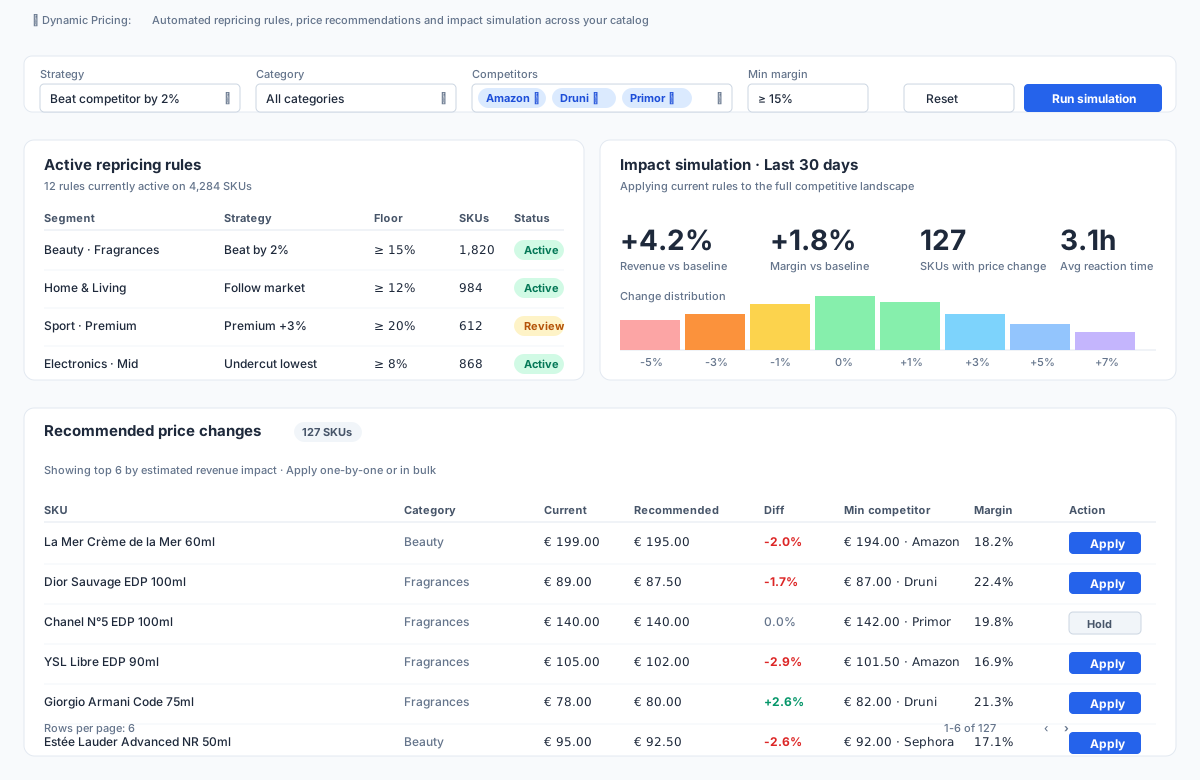
Dynamic Pricing & Repricing
The market changes.
Your strategy stays yours.
Turn market data into executable prices in real time. Configurable rules by category, brand and minimum margin so your price adjusts to the market automatically or on recommendation, depending on how you want to operate.
Your own rules
You define the strategy: full or assisted automation.
Market data
Decisions with context, with capture up to hourly.
Control by category
Automate only where it makes sense. The control is 100% yours.
Qué incluye
Dynamic Pricing & Repricing, en detalle
-
Repricing rules
By category, brand and minimum margin.
-
Configurable strategies
Follow the leader, undercut, target margin.
-
Signals to act on
Prices, promotions, availability and market changes.
-
Recommendations by SKU
With the justification behind each adjustment.
-
Integration with your ecommerce
Via API or price feed.
-
Impact simulation
Before applying any change.
The market changes every hour. Your price can too.
Monitoring competitors' prices is the first step. The second is acting. Data Seekers closes that loop: it captures market data, applies the rules you have defined and executes the price change, directly in your ecommerce via API or feed, or as a recommendation for your team to approve. No spreadsheets. No manual reviews. No delays.
Features
Five feature blocks to automate repricing
Rules, strategies, recommendations, integration and simulation: everything you need for the price to move on its own, within your limits.
Impact Simulation Before Applying Changes
Before activating any rule or price change, Data Seekers lets you simulate the estimated impact on margin, category competitiveness and the resulting Beat/Meet/Lose position.
| SKU | Current price | Leading comp. price | Rule | Proposed price | Margin | Status |
|---|---|---|---|---|---|---|
| Product A | 29.90€ | 26.50€ | Undercut -1% | 26.24€ | 18% | ✅ Above minimum |
| Product B | 45.00€ | 39.90€ | Follow leader | 39.90€ | 12% | ✅ Above minimum |
| Product C | 19.90€ | 15.00€ | Target margin | 18.50€ | 15% | ✅ Maintains margin |
| Product D | 89.00€ | 79.00€ | Undercut -1% | 78.21€ | 9% | 🔴 Blocked by minimum margin |
✅ = Executable price within margin · 🔴 = Change blocked to protect the minimum margin.
Repricing Rules by Category, Brand and Minimum Margin
Define specific rules for each context of your business. By category, by brand, by SKU or by acceptable minimum margin. The platform applies the rules automatically and never crosses the limits you have set, the minimum margin is a floor that is never breached.
Configurable Pricing Strategies
Follow the market leader, controlled undercut against the cheapest competitor, or maintain a target margin regardless of market movement. Each strategy is configurable and can be combined by catalogue segment.
Per-SKU Price Recommendations with Justification
For teams that prefer to maintain human control, Data Seekers generates per-SKU price recommendations with the justification behind each one. Your team approves, rejects or modifies before execution.
Integration with your Ecommerce via API or Feed
Price changes are applied directly to your ecommerce platform without manual intervention. Compatible with the main market platforms via API or price feed.
Adjust your prices fast, without losing control of your strategy.
Define rules by category, product or part of your catalogue. When the market changes, DIP Insights applies those rules and proposes or executes the adjustment according to the model you choose.
The data triggers the decision, but your team defines the rules. You can adapt the model to each category and decide when to approve and when to automate.

What it includes
Dynamic pricing, designed to operate with control:
From the market change to the updated price, with your rules in between and the application mode you choose.
- Rules your business definesCreate rules by category, by product or by part of your catalogue, with a visual and flexible configurator.
- Signals to act onCompetitor prices, promotions and discounts, availability and other relevant market changes.
- Two ways to applyRecommendation with manual approval, or automation via API or feed, depending on your strategy and by category.
- Market detected We detect relevant changes in the market.
- Retailer rules We apply your rules and objectives.
- RecommendationManual approval AutomationAPI / feed
- Updated price The adjustment is applied according to the model you have chosen.
How it is used
How retailers automate repricing and eliminate manual pricing work
The problem is not knowing that a competitor has lowered their price. The problem is that by the time you find out, you've already lost traffic. And by the time you decide to act, you've lost more. Data Seekers eliminates that delay.
One system, different levels of autonomy.
- Recommendation modeFull control
DIP Insights proposes the adjustment and explains the signal behind it. Your team approves, edits or discards.
- Proposal by SKU with its justification
- Your team approves, edits or discards
- Nothing changes without your sign-off
Rule examplePremium fragrances
- Automation modeAutomatic execution
The change is executed via API or feed only for the rules and scope you have defined.
- The rule is triggered by the market signal
- It is executed via API or feed in your ecommerce
- Only within the scope you defined
Rule exampleReplenishment



Configure each decision where it makes sense.
Apply different strategies by category, by product or by part of your catalogue. You can combine configuration levels to fit your business.
- By categoryDefine rules for a whole category, such as fragrances, make-up or skincare.
- By productApply specific rules to individual products with your own criteria.
- By part of the catalogueSelect a group of SKUs by attributes, tags or any other criteria you define.
A beauty sector retailer had a team spending several hours each week reviewing competitors' prices and manually updating their catalogue. With Data Seekers, they configured repricing rules by category with protected minimum margin. The team went from managing prices to overseeing strategy.
A toy retailer used recommendation mode for sensitive categories. Each morning, Data Seekers generated a list of SKUs with an adjustment recommendation and justification. The team approved in minutes what previously took hours to analyse.
For automatic repricing to work, it needs real-time market data. That is what: Pricing Intelligence for retailers
Lo que este módulo cambia en tu día a día
Margin is a floor that is never touched
Every rule carries a mandatory minimum margin: the platform never executes or recommends a price below it.
You choose how much to automate
Automatic execution via API or feed, or a recommendation approved by your team. Both modes coexist in the same catalogue.
No manual price work
No spreadsheets and no manual reviews: the team moves from operating prices to overseeing strategy.
FAQs
Frequently asked questions about automatic repricing for retailers
What is automatic repricing and how does it work in ecommerce?
Automatic repricing is the process by which an ecommerce's prices adjust dynamically in response to market movements, competitor prices, demand changes or margin criteria, without manual intervention. Data Seekers captures market data, applies the rules the retailer has defined and executes the change directly on the ecommerce platform via API or feed, or generates a recommendation for manual approval depending on the chosen operating mode.
Can I control that repricing does not sacrifice my margin?
Yes. The minimum margin is a mandatory parameter in the configuration of any repricing rule. The system never executes or recommends a price that crosses that floor. If applying a rule would result in a margin below the defined minimum, the change is automatically blocked and the team receives a notification for manual review.
What repricing strategies are available?
Data Seekers offers three configurable strategies: follow the market price leader, controlled undercut against the cheapest competitor with a differential defined by the client, and target margin maintenance regardless of market movement. Each strategy can be applied by category, by brand or by SKU, and can be combined within the same catalogue.
Does the system execute changes directly in my online store?
It depends on how each client wants to operate. Data Seekers offers two modes: direct automatic execution via API or price feed, changes are applied to the ecommerce platform without manual intervention, and recommendation mode, where the system generates a list of proposed adjustments with justification and the team approves before executing. Both modes can coexist for different categories within the same catalogue.
Can I simulate the impact of a rule before activating it?
Yes. Before activating any rule or price change, Data Seekers allows you to simulate the estimated impact on margin, category competitiveness and the resulting Beat/Meet/Lose position in the market. This allows you to evaluate the effect of each decision before executing it, with no risk and no surprises.
Which ecommerce platforms is the integration compatible with?
Data Seekers integrates with the main ecommerce platforms on the market via API or price feed. The integration is technical and is configured during the onboarding process. For proprietary platforms or custom developments, Data Seekers' technical team assesses feasibility during the implementation process.
How often is the market data that feeds repricing updated?
Competitor price capture is configurable: from several times per hour to x days per week, depending on the needs of each category and client. For high-turnover SKUs or high-demand periods, it makes sense to increase the frequency. Capture frequency is the client's decision, not a platform limitation.
How does this module relate to Pricing Intelligence?
Dynamic Pricing & Repricing is the next step after Pricing Intelligence. While Pricing Intelligence provides market visibility and analysis, the Repricing module turns that data into executable action. Both modules work independently, each client accesses and pays only for what they need, but combined they offer the complete cycle: see, decide and execute from a single place.
In which sectors and markets does Data Seekers operate?
Data Seekers works with retailers in sectors such as beauty, health, wellness, pharma, FMCG, electronics and fashion, with coverage in markets worldwide. The module adapts to the size of the catalogue, the competitors monitored and the markets in which each retailer operates.
How many hours does your team spend each week updating prices manually?
Request a demo and in less than 30 minutes we'll show you how Data Seekers can execute that task automatically, with the rules you define, the margin you protect and the strategy you decide.